2013 – An Amazing Year for HHCE

Houdini Nuts Get-Togehter Nov 2013

2013 was an amazing year for Harry Houdini Circumstantial Evidence (HHCE) for a number of reasons:

Houdini Nuts Get-Together Exchange

Participated in an exchange of ideas regarding the life of Harry Houdini and his enduring effect on modern history with John Cox, Patrick Culliton, Arthur Moses, and Stacey Zimmerman.

GG5

Shared a number of not widely known facts about the Houdini movie starring Tony Curtis and Janet Leigh:

mysterio (Al Pitroff) 1913

Buffalo Evening News November 21, 1913 clipping courtesy of Bill Mullins

Researched and shared evidence WRT when Houdini may have first publicly performed his suspended strait-jacket escape from a building, as well as where he got the idea from:

Houdini Grim Game Limited Edition 1 of 10

Acquired a signed limited edition Grim Game Three Dimensional Giclée Print by Disney Artist Dave Avanzino:

Marc Wanamaker Bison Archives Grim Game Image

Photo courtesy of Marc Wanamaker, Bison Archives

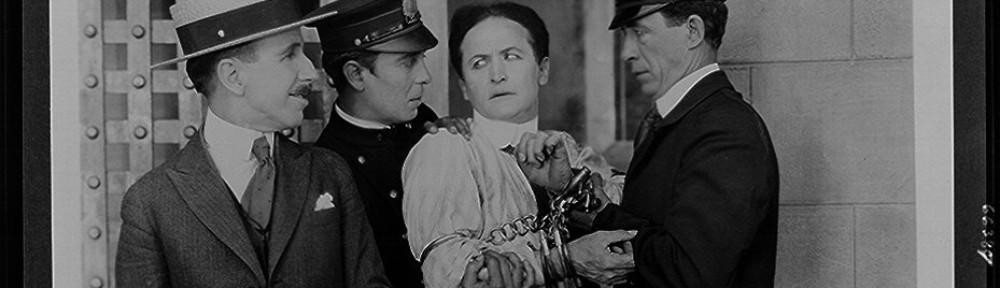
Discovered several rare behind the scenes shots from The Grim Game in the book, Aviators in Early Hollywood by Shawna Kelly:

298-07 Ebay

Discovered the true identity of the police reporter in The Grim Game:

The Fort Wayne Journal - Gazette Fort Wayne Indiana 19 Oct 1919 Page 5B

Shared some incredible Grim Game ads and not widely known info about Houdini and the movie:

houdiniPaperRobotPages (1)

Shared some incredible Master Mystery ads and not widely known info about Houdini and the movie:

bustcloseupShared research on how many times Houdini’s bust was replaced:

Hall of Fame Back CoverShared memories and ads from Houdini Magical Hall of Fame:

Shared Houdini’s last message to the American public:

Shared Houdini’s connection with the last days of the Father of American Music (Stephen Foster):

Mentioned numerous times by John Cox at his Wild About Harry (Houdini) blog and Facebook pages:

And last but not least, my daughter had a baby girl, my son got engaged, and I survived a heart-attack.  I am truly blessed and look forward to 2014.

In 2014, I will start the New Year by sharing some new information I came across about the Mirror Handcuff Challenge.  You won’t want to miss it.  See you next year!

What is Houdini’s Greatest Stunt on Screen?

Care to take a guess?

1920 03 20 The Picture Show Image 1

During an half an hour interview, Houdini was asked the following question:

WHAT do you consider the greatest stunt you have done for the screen?

“ Another incident in the same picture,” answered Houdini.

“ I stood in the archway of a prison, thus –“ Here he took up a crouching position, in the corner of the room, and enacted the whole thing for my benefit.  “ A heavily loaded jerry, going at twenty-two or -four miles an hour rolled by me.  I threw myself on the ground, completely rolling over between the fast revolving fore and hind wheels over and over, till I caught the transmission bar, and hung there for very dear life! Thus was I carried to the aid of the heroine.  Though my words may not convey very much, this was my greatest stunt.  It allowed of no rehearsals – I said to the camera-man, ‘Get this now or never!’  And had I made the slightest false move I should have been crippled for life, if not killed ”.  [The Picture Show, March 20, 1920 p19]

Here is another account of the incident.

Here is another great stunt from the Grim Game.

Related:

The Prison/Truck stunt(s) sound amazing, as does the Strait-Jacket/Awning/Wall stunt(s). For me, I need to see the movie to decide which one is the greatest stunt.

Special Thanks to Bill Mullins who shared with me the “Half-An-Hour with Houdini” Interview and photo from The Picture Show Magazine.

1920 Kinema Comic Insert

1920 Kinema Comic InsertThis is a large paper insert issue given away with comics.  It measures 212mm x 103mm.

The writing at the bottom of the card reads:

Paramount-Artcraft
Presented with No. 3 of the Kinema Comic, May 8th, 1920.
HOUDINI
The Handcuff King

Note: Paramount-Artcraft was the picture company that made “The Grim Game”.  The Handcuff King image on the card is from still L302-55:

HHCE L302-55 11x14

According to Arthur Moses, the British Boys weekly “The Kinema Comic” ran a serial “The Amazing Exploits of Houdini” (“Written by Houdini Himself” – or so it says) and always began on page 6 and continued on to others.  These were tales of pure fiction with maybe 2% fact thrown in. The weekly serials began with the v1n1 April 24, 1920 issue.

Harold Kellock says in his book “Houdini His Life-Story” (1928) that “The Kinema Comic” serial ran for seven years.

2005-09-007

The Master Mystery postpones Buried Alive Stunt on Stage

filmdaily Sunday Aug 25 1918 page 4

“The Master Mystery” Film Daily Ad – August 25 1918

Harry Houdini is recovering from injuries received while working in the new Houdini (Rolfe) serial [The Master Mystery] at Yonkers, Houdini bumping against a wall while making an indoor descent in a parachute. His left wrist was fractured and bruises suffered, but the injuries will not prevent him from opening with the Hip show, New York, Aug 22. [Variety Fri August 16 1918 page 6 Vaudeville]

“Everything” opens Thursday August 22, 1918 at the Hippodrome (aka the Hip) in New York.

Buried Alive on Stage PosterHoudini appeared with his left hand bandaged.  He explained that because of an accident in which his wrist was fractured, he could not present his burial trick.  But he escaped from a straight jacket, while hanging head down, at a height near the top of the proscenium.  He must have been in pain, for he never did the escape quicker in public. [Variety Fri August 30, 1918 page 16 Show Reviews]

Houdini felt called upon to apologize for the simple nature of his stunt. [New York Tribune August 23 1918]

Several acts left “Everything” at the Hippodrome Saturday [Nov 2], including Houdini, Reynolds and Donegan, and Gerda Guida, the Danish danseuse. They had been engaged on a ten-week basis with contracts expiring and not renewed.  Houdini had been working under a handicap ever since the opening of the show because of a broken bone in his wrist. [Variety Fri November 8 1918 page 5 Vaudeville]

When Houdini returns to the Hippodrome he promises to present the most sensational act he has ever attempted.  In full view of the audience, lying flat on the floor of the stage itself, he will allow himself to be covered with three tons of sand — dumped on him out of a big automobile truck.  Then he will dig himself up through the pile in less than 60 seconds.  To make it more difficult Houdini will be put in a strait-jacket before the sand is dumped on him.  The date of his reappearance at the Hippodrome will depend on his complete recovery from a recent accident in which he broke his wrist. [Variety Fri November 29 1918 page 7 Vaudeville]

Harry Houdini was in New York Monday [Dec 2] with the plaster cast off his wrist.  He has a ten weeks’ leave from the Hippodrome.  Three of them have been spent by Houdini before the camera [The Master Mystery].  He may play vaudeville during the other seven weeks outside Greater New York, according to permission given by the Hip management. [Variety Fri December 6 1918 page 11]

Buried Alive Poster 1926Buried Alive Stunt on stage is postponed until September 1926.  The escape is finally debuted at the Majestic Theatre in Boston:

  • John Cox blog – Ad shows Houdini performed Buried Alive in 1926
  • Dean Carnegie blog – Episode 3 Additional Information (Includes another 1926 Buried Alive ad)

Another Ending to the Tony Curtis Houdini Movie

TC JL Flower

Paramount Picture Corporation

Kevin Connolly over at Houdini Himself replied to my post that described two different endings with the following comment:

I haven’t read the script in a very, very long time, but I seem to remember that there was a third ending. As I try to remember it, I think it was just Bess (Janet Leigh) at the end by herself and Houdini has been dead for a while. I think she was doing something with a flower setting.

As promised, I said that I would do a blog about the third ending that Kevin mentioned.

The second draft screenplay (Yellow) dated August 5, 1952 ends as follows:

After Otto smashes the glass front of the cell with his axe, there is a close shot of a crystal vase of red roses on a table before a half-opened window.  A gust of wind whips the curtains back against the vase.  The vase topples to the floor and crashes.

We then see Bess dressed for traveling, packing a wardrobe trunk.  She crosses the broken vase, gathers up the red roses, and sees a small note twined around the stem of one of the roses.  She lays the roses on the table and curiously unwinds the note from the one red rose.  The wind whips the lace curtain across her face, shrouding it like a mourning veil.  As she brushes the curtain aside from her eyes to read the note:

Roses are red,

Violets are blue,

Even after I’m dead

I’ll still love you.

As tears well in her eyes she glances up from the red rose to a faded yellow poster on the wall.  The music of the Dime Museum comes softly over the poster of Houdini at the age of twenty, wearing his ill-fitting dress suit and pulling a rabbit out of a silk hat, the age old symbol of the magician.

The End.

Part 2: Is this really how it went down?

TC Dressing Room Punch Water Cell

If we are referring to the first preliminary green screenplay (4-23-52) for the movie “Houdini” starring Tony Curtis, then the answer is, YES.  

As a result of the blow (i.e., punch) described in Part 1, Houdini is in bad shape when he goes on stage a little later that evening to do his most hazardous escape — the water  cell:

As he is placed in the water cell upside down, he sees the grotesque Halloween costumes and masks of some of the children in the packed audience and his face shows fear as he realizes it is Halloween night.

The curtains are drawn across the cell at the regularly allotted time.  Bess apprehensively signals Otto who whips the curtain aside, discovers Houdini lying unconscious, and quickly smashes the glass with an axe…

Bess is beside the dying Houdini in ambulance.  His voice is barely audible as he says, “I’ll come back, Bess — I’ll find a way — “  Bess nods through her tears…

It is Halloween night, 1936, and Bess and Sydney arrive at the abandoned Houdini house.  For the past nine years on the anniversary of Houdini’s death, Bess has come here to see if he could contact her.  She promised him to try for ten years before giving up and tonight is to be the last attempt.

Bess and Sydney wait patiently in Houdini’s study which has kept intact. Midnight comes and again nothing has happened.  Sydney is urging the intense Bess to leave when suddenly she hears the Hungarian waltz. A beatific look comes over her face, and Sydney, hearing nothing is puzzled.  Bess sways to the music and moves over to a faded poster.  It reads Schultz Dime Museum and shows a picture of Houdini at the age of twenty, wearing is ill-fitting dress suit and pulling a rabbit out of a silk hat.  The music swells to a crescendo….  [Screenplay read and summarized by Dorothy Harrington, 4-30-52]


If we are referring to the final version of the Tony Curtis movie (1953), then the answer is NO.

It went down like this:

Houdini is lying down in his dressing room, and winces, when Otto touches his stomach.

Otto: “Still hurts you there doesn’t?”

Houdini: “It’s alright.”

Otto: “You should have had that taken care of a long time ago.”

Houdini: “It’s nothing, it comes and goes.”

Otto: “I think it is your appendix”

Houdini: “Since when have you been practicing medicine?”

Otto: “You don’t have to be a doctor to know that something is wrong”

Houdini: “Alright I will have it looked at as soon as we finish the tour”

Later that evening, Houdini performs the Barrel Escape and the Steel Strait-Jacket Escape, but the audience wants more; they want the Torture Cell.

Houdini goes into his dressing room to prepare for the Torture Cell when he accidentally bumps his stomach against the handle of a sword protruded from a sword box illusion.  He is in obvious pain.

He enters the Pagoda Torture Cell. Houdini passes the time-limit and the cabinet is broken open, flooding the stage.  Houdini is still hanging in the cabinet, unconscious.

Bess is then seen beside the dying Houdini on stage.   He regains consciousness long enough to promise her that he will come back to her, he will find a way somehow.

We then hear the Hungarian Waltz and fade to a poster that reads Schultz Dime Museum and shows a picture of Houdini at the age of twenty, wearing is ill-fitting dress suit and pulling a rabbit out of a silk hat.  The music swells to a crescendo…  The End

According to the man (Jon Oliver) that currently sleeps in Houdini’s bed: It is believed that they changed the movies ending from Houdini getting punched to him dying in the cell because the lawyers at Paramount did not want to get a law suit since the students were still alive.  For another reason the ending could have changed, check out A New Twist on The End of Houdini by Tony Curtis.

If we are referring to how Houdini died in real life WRT the Houdini death blow (i.e., punch), then you will need to talk to Houdini’s Ghost (Patrick Culliton) or The Female Houdini (Dorothy Dietrich) for an answer and rethink the rethinking on the Houdini punch.

Part 1: Is this really how it went down?

Houdini Punch Image

Is this really how it went down?

Houdini is disturbed by three college students to whom he promised to give an interview for their paper. Although Houdini is extremely weary he manages to joke with them about his successful feats of strength, such as having had a 500 pound weight dropped on his stomach.  As the boys continue to question him, Houdini starts going through an accumulation of mail and only half-listening, he consents to let one of the husky boys take a punch at him.  The boy delivers a crushing blow to Houdini’s stomach and from the look of surprise and pain on his face they realize with alarm that Houdini was unprepared for the attack.  The boy apologizes, and Houdini, concealing his pain, assures him he’s all right.  The boys leave and Houdini, in agony, manages to stretch himself out.  [Dorothy Harrington]

Check back for the answer in my next post.

HHCE Magical Celebration in San Jose

220px-Jose_Improv_TheaterThis past weekend, we went to San Jose to celebrate the engagement of my Son David to a beautiful girl named Danielle.

It was magical.  At the engagement party, Danielle’s father gave a very touching speech about his little girl; and I did a special magic tribute to the couple:

“This 1 dollar bill represents David and his family and this one dollar bill represents Danielle and her family.  If we put both together, we end up with two (the two bills become a 2 dollar bill) amazing people meant to be together.”  I followed this with a silk, ring, rope routine with a theme about tying the knot.  For the finale, I said that “David and Danielle could not get married unless they passed my test with a deck of cards”:

They each select and sign cards that are obviously put in different halves of the deck. When she squeezes the deck and thinks fondly of him, his card and only his card mysteriously turns face up in the deck.  Then he squeezes and thinks of her, and her card does the same.  As a kicker, the two cards are shown to have moved together in the deck.  Then as the final straw, when the two cards are put together in her hand and his hand covers the cards, the two cards become one in their hands.

They passed the test.

It was an amazing time had by all!  The food, drink, cake and party were a total success.

BTW:  During our visit, my son told me that Houdini had performed at the San Jose Improv.

Jose_Theatre,_San_Jose,_California_-_photo_taken_in_1931.jpeg

Houdini breaks own record in The Master Mystery

MM Overboard Box 1

Before the camera Houdini broke his own record in a scene of the great fifteen episode serial, “The Master Mystery.”  Instead of two sets of handcuffs, he wore three, he was completely bound by heavy chains from his shoulders to half way below his knees, his ankles encased in leg manacles.  Thus equipped, he was placed in an iron enforced heavy wooden packing case, securely bound, and hoisted by eight strong men out into the Hudson River.

MM Overboard Box 2

A strong current was running, the box tipped to one side, then immediately sank to view.  In exactly 32 seconds, Houdini appeared, swimming leisurely about as though taking a refreshing dip. But not alone did he break his own record by twenty seconds, almost cutting it in half, but he performed the feat with a broken wrist; he obtained no permit from the police, he signed no release statements for his men, so sure of his success.  As his box was lost to sight and was to be used again in the serial, after regaining the dock from which the box was hoisted, he joined the divers in their search for it. When found, it was still securely bound.

MM Overboard Box 3

Houdini resumed his work before the camera as the though the marvelous record-breaking feat he had just accomplished were a mere part of his day’s routine, but Mr. Rolfe, the president of the B.A. Rolfe Productions, Burton King, who directed the scene, the cameramen; in fact, all who watched Houdini take his life so lightly in his own hands, were well high nervous wrecks, so high had been their tension, so keen their anxiety.

[Images from YouTube and Text is from The Hays free press June 26, 1919, Hays, Kan.]