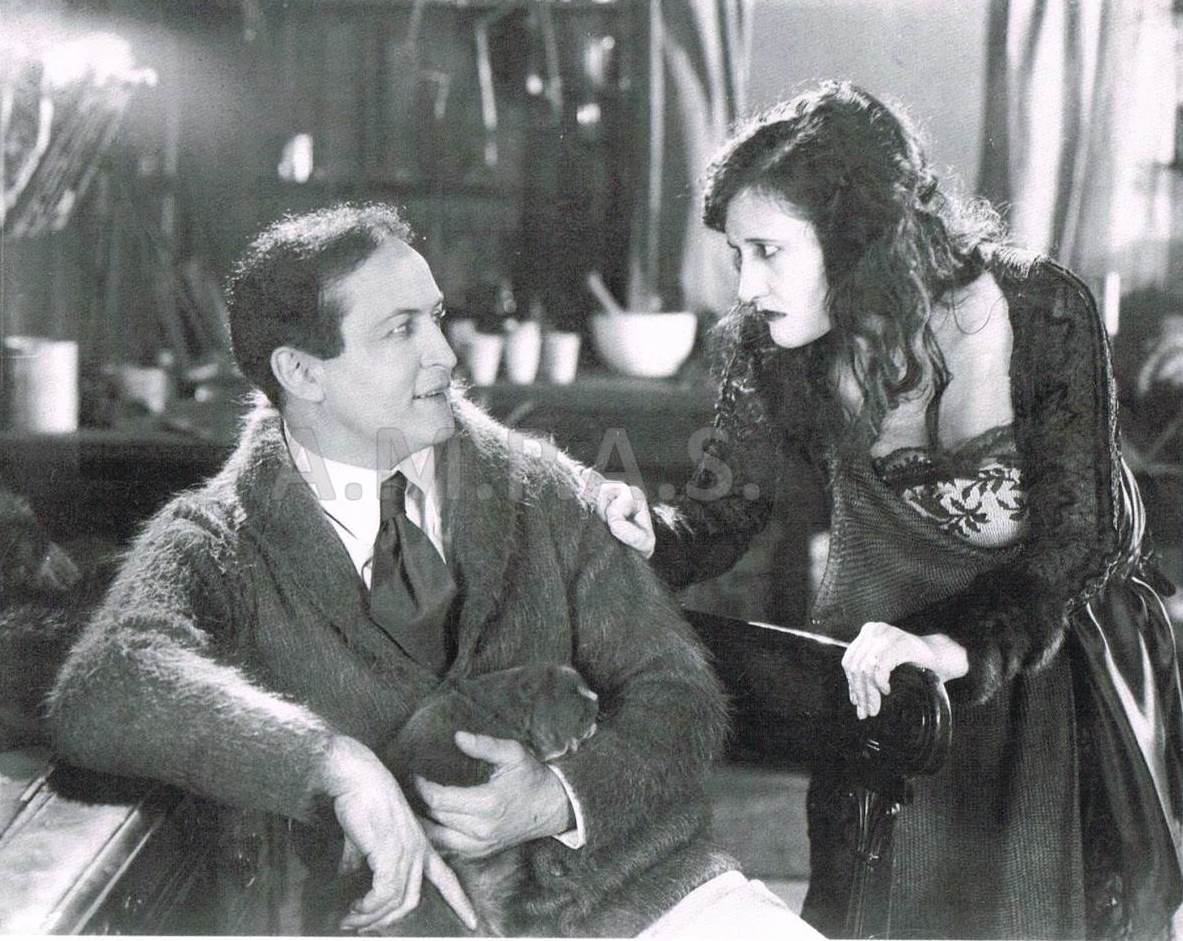
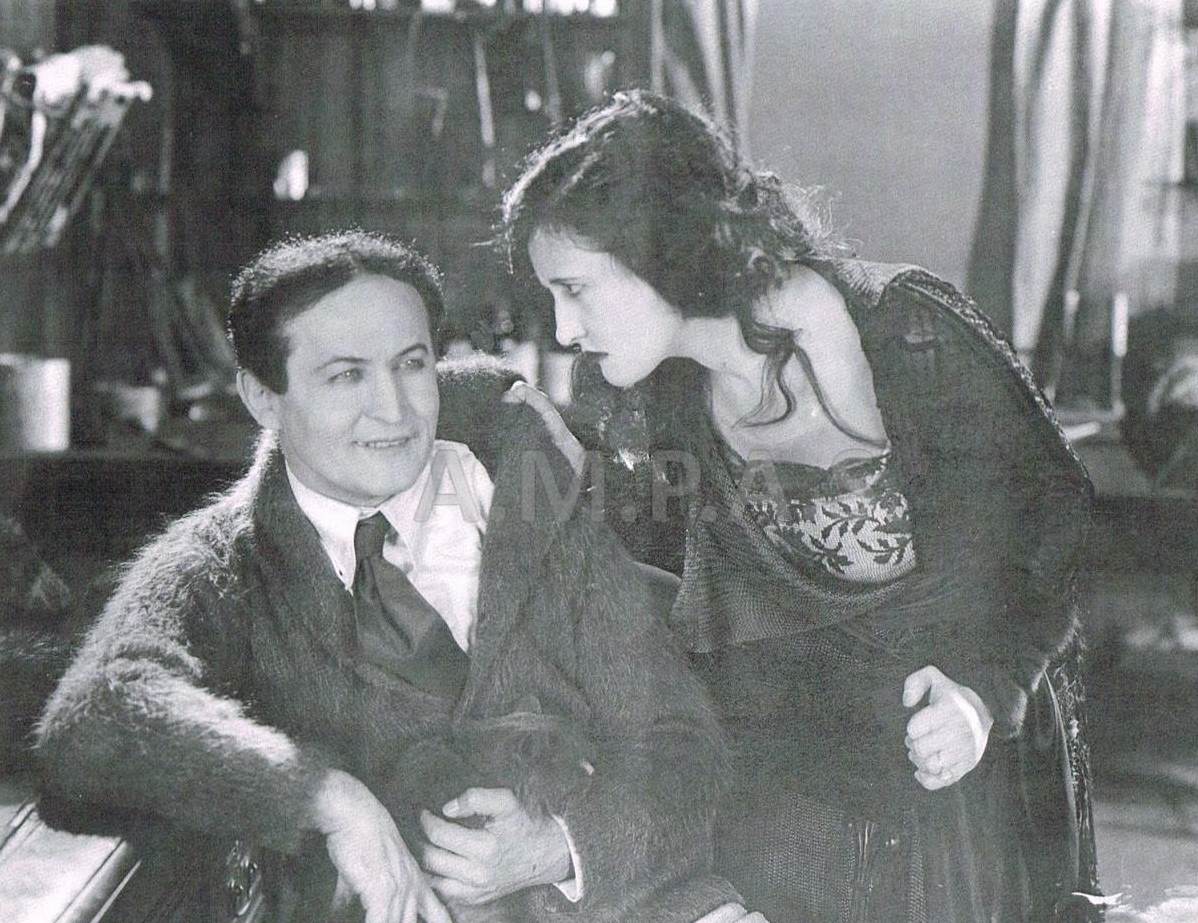
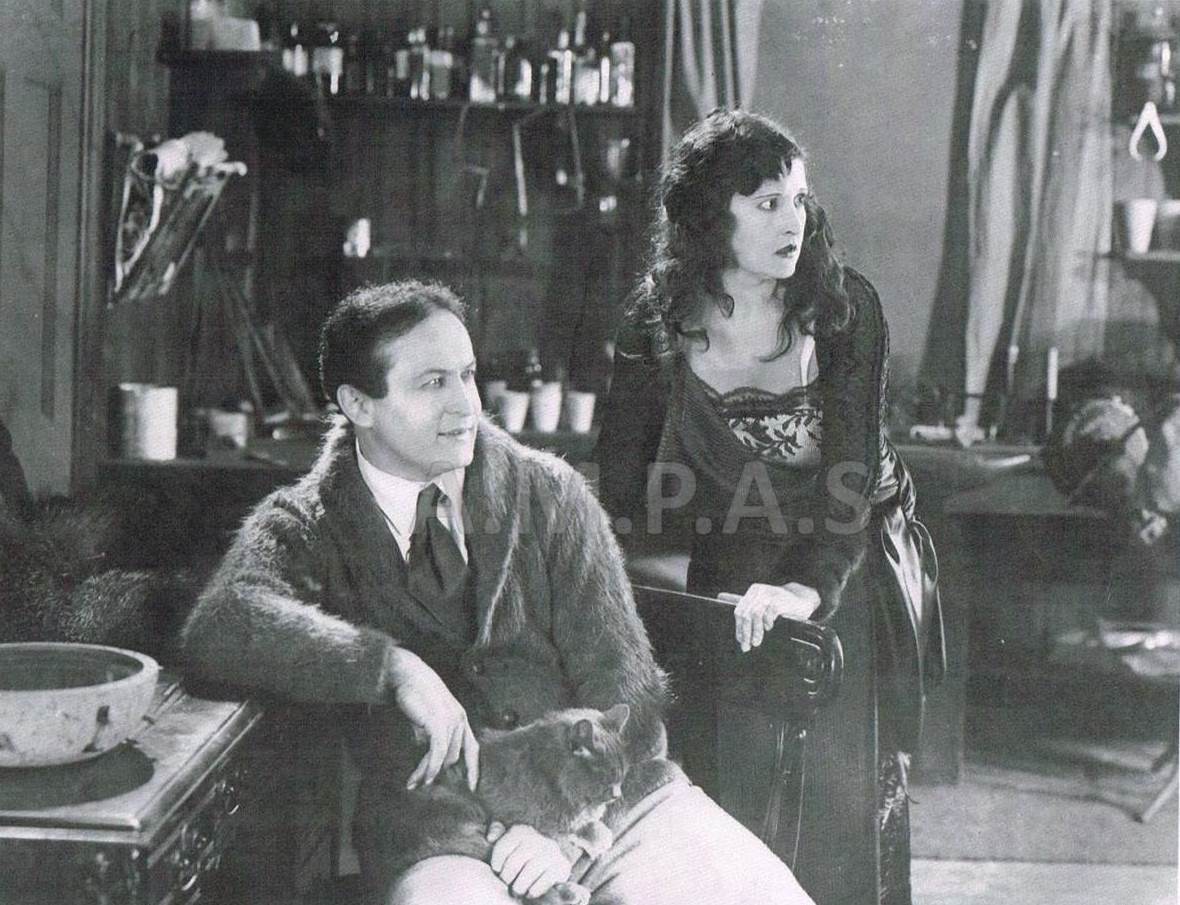
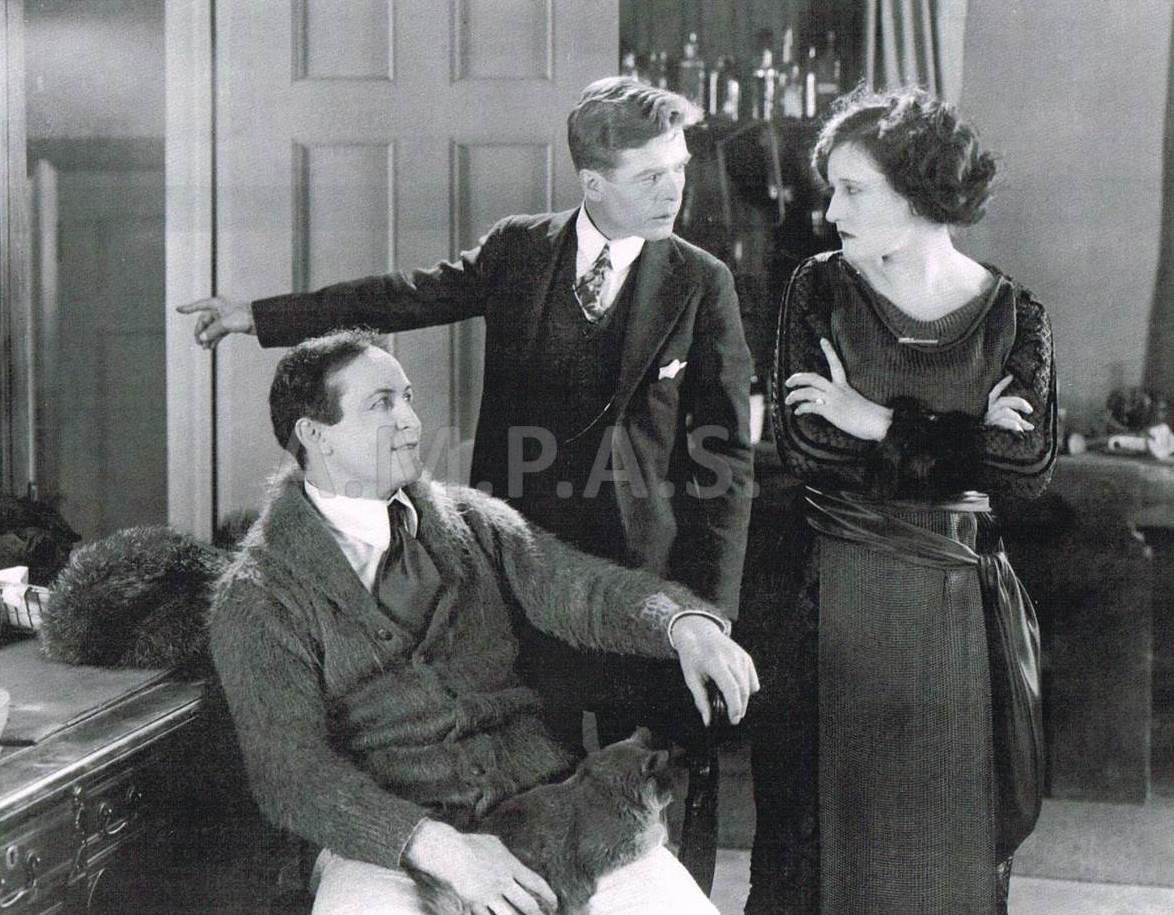
Was “A Magician Among the Spirits”, co-authored with C. M. Eddy, Jr.?

A Magician Among The Sprits CoverCM EDDY JR

According to the various websites, Houdini’s classic book “A Magician Among the Spirits”, was allegedly co-authored with C.M. Eddy Jr. but he is not credited in the book.  This was news to me, so I decided to see what (if any) involvement Eddy had with “A Magician Among the Spirits”.

The first question that came to mind was when did Houdini and Eddy first know each other?

In Joshi, p. 108-111, Letters From New York, Night Shade Books 2005, we learn from a letter by HP Lovecraft to his aunt (on 10 February) that CM Eddy has come to New York unexpectedly. The date is Sunday, 1 February 1925. He states, “unexpected guest … CM Eddy … on literary business, interviewing magazine editors & stopping with Houdini up in west 113th Street …” Lovecraft continues, “Eddy had an engagement at Houdini’s house at midnight, so we had to hustle … I piloted Eddy to Houdini’s home via the Bronx subway, I then returned …”. [chrisperridas.blogspot]

I could not find any earlier sources, so based on Joshi, Houdini and Eddy first met each other no later than 2 February 1925. But, “A Magician Among the Spirits” was published in May 1924 well before this face to face meeting.

In case you are wondering, Eddy and Lovecraft most likely first met around August 1923. [chrisperridas.blogspot]

BTW: Houdini gave Lovecraft an autographed copy of “A Magician Among the Spirits“:

  • “To my friend, Howard Lovecraft/Best Wishes,/Houdini/ “My brain is the key that sets me free.”

In 1924, Houdini, Lovecraft and Eddy had peripheral connections to “Weird Tales” magazine:

C. Henneberger, the publisher of “Weird Tales”, tried to increase readership of the magazine by bringing Harry Houdini on board. This resulted in three issues featuring Houdini:

Weird Tales Hermannstadt coverWeird Tales spirit lover coverWeird Tales Pharaohs cover

The Spirit Fakers of Hermannstadt” (March to April 1924), “The Hoax of the Spirit Lover” (April 1924) and “Imprisoned with the Pharaohs” (May/July 1924).  The last was by Lovecraft where he rewrote a strange narrative which Houdini related orally to Henneberger.

Lovecraft wrote the story for Houdini in February 1924, and met Houdini in person by October 1924 [Date is from “An H.P. Lovecraft Encyclopedia” by Joshi].

The author or authors of the others have not been identified.  Mike Ashley’s The Houdini Chain found in Postscripts says Walter B. Gibson denies being the author and Mike Ashley speculates that they may have been the work of Clifford Eddy who worked as Houdini’s booking agent [?] at that time [?].  He had sold several stories to “Weird Tales”, some revised by Lovecraft.

Ironically, Mike Ashley also mentions that virtually everything attributed to Houdini was ghost written; He says, that even “A Magician Among the Spirits” was written primarily by Oscar Teale and based upon Houdini’s notebooks, though Houdini cast and editorial eye over it.

We know that Eddy had involvement with “The Cancer of Superstition“.

But so far, I haven’t found any concrete evidence that shows Eddy had any involvement with “A Magician Among the Spirits”.

However, there is evidence that Teale may have played a role.

  • In a letter dated August 10, 1931, Teale writes to Julian Proskauer: “Having originally written Houdini’s ‘A Magician Among The Spirits’ feel that I am fairly conversant with all phrases of the damnable work”.
  • See Potter & Potter August 2014 Auction Descriptions below for Lots 68 and 20.

Lot 68:

28862180_1_x

Description: Houdini, Harry. A Magician Among the Spirits original manuscript. Likely a second or third draft of Houdini’s last book exposing and explaining the history of modern spiritualism and the methods used to defraud the public by an array of underhanded individuals who claimed an ability to communicate with the dead. Included here are original typescripts and carbons of over half of the book, including the following chapters: “Introduction” and a synopsis, “The Fox Sisters,” “The Davenport Brothers,” “Odelia Diss Debarr,” “Palladino,” “Slate Writing,” “Spirit Photography,” “Ectoplasm,” “Investigations – Wise & Otherwise,” and “Exposé of Methods.” Many chapters include a one- or two-page summary. Hundreds of handmade corrections in pencil and ink are scattered throughout, and include considerable underlining, strike-throughs of entire paragraphs, and corrections. Dozens of pasted-in additions, mostly in the form of footnotes, have been added to the original 4to pages. Some corrections likely in the hand of Houdini himself, though the bulk of the holographic notes are most likely in the hand of Oscar Teale, a well-known magician and author in his own right, and Houdini’s secretary and aide in investigating the spiritualists and their methods. A Magician Among the Spirits was published in 1924. However, based on a comparison of the text in these pages, the manuscript more closely reflects a revised edition Houdini was preparing at the time of his death, as the prose more closely matches a working manuscript of that edition published posthumously, in 1996 (see lot 20). The text here is strikingly similar, but not identical to that manuscript. Hundreds of pages in all, typed on rectos only, some with plain manuscript wrappers and bound at tops of sheets, wrappers hand lettered with title names, other chapters loose.

Lot 20:

28862084_1_l

Description: Houdini, Harry. A Magician Among the Spirits. The Original Manuscript. [Washington, D.C.]: Kaufman and Greenberg, 1996. Black cloth with photograph of Houdini and matching slipcase. From an edition of 1000 copies. 4to. Very good. A facsimile of the manuscript for a revised edition of Houdini’s book exposing fraudulent mediums.

Notes:

When first published in 1924, Houdini’s manuscript was dramatically cut from 175,000 words down to 75,000 words. That is, the editors at Harper & Brothers rearranged, rewrote and above all cut out huge portions of the text. Displeased with the published work, Houdini was preparing this typescript for a second edition at the time of his unfortunate, and untimely, death. The typescript contains several holographic notations in Houdini’s hand as well as other revisions in the hand of his assistant Oscar Teale [or is it in the hand of C.M. Eddy?].
Houdini’s Book of Magic times three

In the 1920’s, Houdini wanted to write three books of magic for beginners. Each book would be dedicated to clearly demonstrating simple magic tricks that the reader could do. Magician Walter Gibson collaborated on the project.

thurston200Gibson had just done research on such tricks for Howard Thurston for the ghost-written book 200 Tricks You Can Do and had literally hundreds of extra tricks as a result of his research: thus there would be no duplication in Houdini’s books.

The first book was to be composed of simple card tricks that could be done with an ordinary pack. The second book was to contain tricks with special packs of cards.  The third book was to cover simple tricks of various types. By early October, Gibson had the first book complete and was ready to deliver it when news came of Houdini’s sudden death in Detroit, on October 31, 1926.

popular_card_tricksLater, the book was published by the E.I. Company under Gibson’s own name, with the title Popular Card Tricks. This forty-eight page book included 91 various card tricks with suggestion on presentation.

Conjurors Magazine March 1945The material for the second was all outlined and twenty years later, Gibson wrote up many of the tricks for a series of articles in a revival of Houdini’s old Conjurer’s Magazine, which he edited, with Hardeen as Emeritus.

Houdinis-Book-Magic-mainThe third was published in 1927 by Houdini’s wife who found the manuscript among his papers. It was titled, Houdini’s Book of Magic And Party Pastimes.

Houdinis BLB MagicLater, another publisher, Whitman obtained rights to the manuscript in 1933 and arranged to print it in the Big Little Book (BLB) format but the material proved insufficient to fill the required number of pages. So, the first 114 pages are from the Houdini manuscript.  The added tricks and puzzles are from other magicians.  The BLB title page retains the original 1927 copyright date.

UPDATE:

The Great Houdinis Book of Magic 1976 w Gibson IntroPublished during the “Houdini renaissance” of 1976, there is also the paperback edition of Houdini’s Book of Magic with a great cover (above) and intro by Gibson in which he tells the story of how the book came to be.  It also carries the 1927 copyright.

Source:

  • eBay listing for Houdini Big Little Book of Magic
  • The Great Houdini’s Book of Magic with Introduction by Walter B. Gibson [1976]
  • Walter B. Gibson and the Shadow by Thomas J. Shimeld


When was the first time that Harry Houdini appeared under his real name?

To answer that, we first need to know when Houdini legally changed his name from Ehrich Weiss to Harry Houdini.

He petitioned the courts for a name change, which would go into effect during his Atlantic crossing.

HH Sailing Jul 8 1913 Unknown Newspaper

July 5, 1913 The Billboard page 13

On July 8th, 1913, he departed NYC on the Kronprinzessin Cecilie (after giving his mother a farewell kiss) and landed in Hamburg about a week later, where he and Bess took a midnight train to Copenhagen.

Now, we just need evidence of his first performance. According to a number of sources, Houdini opened at the Cirkus Beketow in Copenhagen.

16 July 1913 Copenhagen newspaper Ekstrabladet ad for HH

16 July 1913 Ad promoting Houdini (Copenhagen newspaper Ekstrabladet)

At 8 pm (CET), Jul 16th, 1913 Houdini performed in Danish, before a circus audience at the Circus Beketow in Copenhagen that included the princes of the royal family.

And then at noon (CET), the next day at a Press reception, Houdini received news of his Mother’s Death, who had passed away 15 minutes passed midnight in Asbury Park NJ, which was 6:15 am (CET) in Copenhagen.  The shock of Houdini’s mother death had been followed with an attack of a “chronic kidney disease”  and Houdini was released from his contract and returned to the states.

However, the performance in Copenhagen was not his first appearance with the legal name of Harry Houdini.  You see, he performed at Sea on July 12th 1913 at 9 pm as evidenced by the following program:

Swann 2006 Catalog Log 166

Swann 2006 Catalog Lot 166 – Program for a performance by Houdini onboard the Kronprinzessin Cecilie.

For reference and additional information, please refer to the following sources used in this post:

Houdini’s Most Wondrous Effect

hh margery cropmargeryhoudinicrop

According to Margery, the Witch of Lime Street:

During the magician’s last visit to Lime Street the two of them sat briefly alone in her son’s room, where she suggested that he, clearly exhausted, could take a nap prior their final Charlesgate séance.  While reclining on John’s bed, Houdini told her about his most wondrous effect.  It had occurred, he recalled, on the Fourth of July at Seacliffe, Long Island – when rain began to fall just as his nephew and other children were preparing to set off fireworks.

See my post from last fourth of July to read about Houdini’s most wondrous effect:

H A P P Y  4 T H  O F  J U L Y  !

Source:

  • The Witch of Lime Street (page 412), by David Jaher

S.A.M. Collectible Card and Houdini Commemorative Stamp

SAM Collectible Card front

In July of 2002, the Society celebrated its Centennial Year in New York City and issued a collectible Houdini Card.  The back of the card reads as follows:

The man who would become “Houdini” was born in Budapest, Hungary, and immigrated to Appleton, Wisconsin as an infant.  He later moved to New York. Early on, he was inspired by Robert-Houdin books (he took his stage name from Houdin). He worked his way up as a Vaudeville entertainer.  His accomplishments included: highly successful overseas and American tours; crusades against spiritualists; developed and named the tenth branch of magic–“escapology”; starred as a movie actor and owned a movie company; and wrote many books and articles.  As National President (1917-1926), he promoted the S.A.M. and encouraged local clubs to affiliate.  He was elected to the S.A.M. Hall of Fame.

FDC GG ADD ON

Also in July of 2002, on the 3rd, the US Postal Service issued a Houdini Commemorative Stamp during the Centennial Celebration.  The Houdini postage stamp contains a hidden image (4 chains wrapped around Houdini’s body) that can only be seen with a special stamp decoder the United States Postal Service sells.

HH stamp plus decoder image

MOTION PICTURES FDCs WITH ADD-ON CACHET

Below are two great vintage 1944 motion picture First Day Covers with add-on cachets for Houdini’s movies, The Grim Game and Terror Island.  These items recently sold individually on eBay for $15.50 and $15.55 respectively.  Congratulations to the winners!

Grim Game FDC:

GG FDC

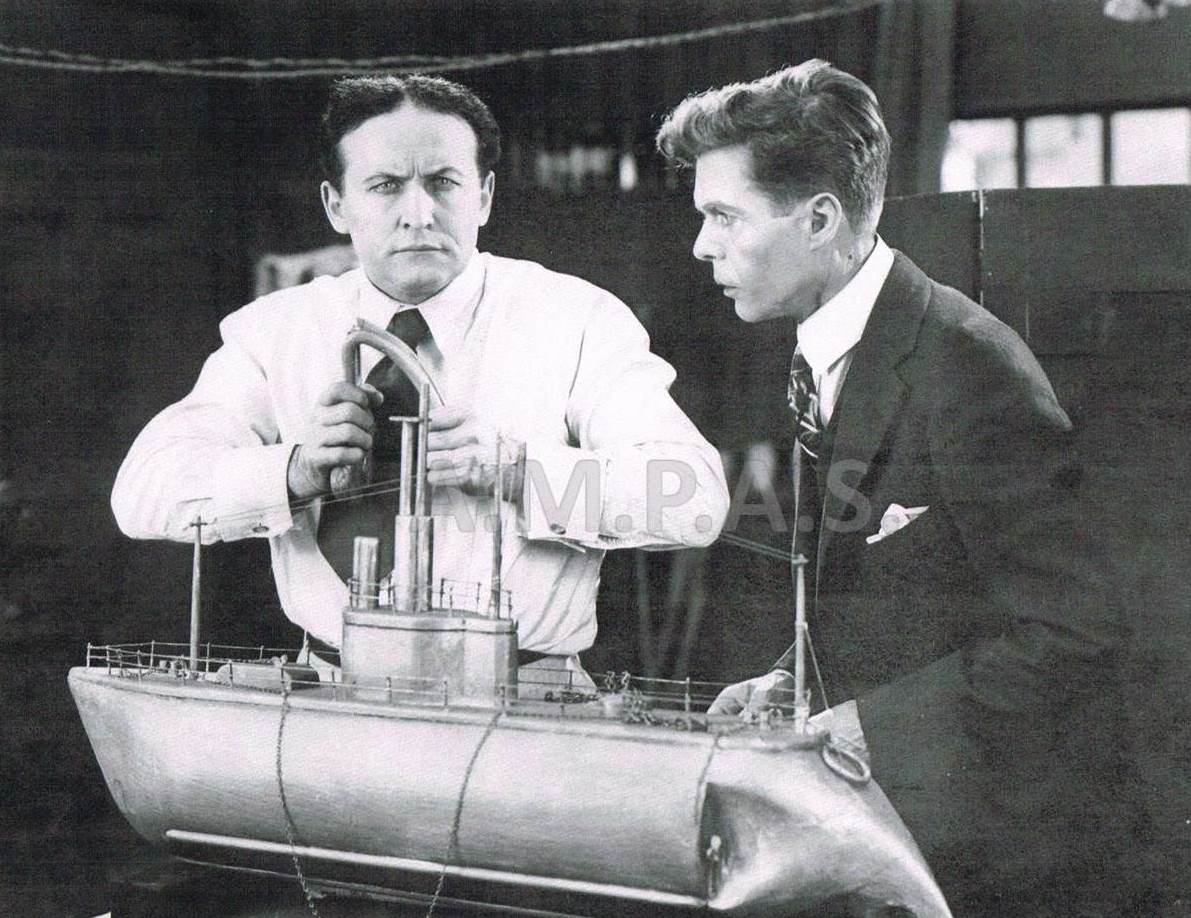
  • MAGICIAN HARRY KELLAR VISITING HARRY HOUDINI AND DIRECTOR IRVIN WILLAT ON THE SET OF “THE GRIM GAME.” [Note: Arthur Moses owns the original photograph which I was lucky enough to see.]
  • FREEMASONS: Harry Houdini was a member of St. Cecile Lodge, New York.
  • He became a Shriner in New York’s Mecca Shrine in October 1926.
  • Harry Kellar was made a Mason May 1875 in Lodge Fraternidad y Homa at Peltas, Brazil.
  • Received the Royal Arch Degree on the Isle of Mauritius.
  • 1850 received the Scottish Rite Degrees in Triple Esperance Lodge, Port Luis, Mauritius, and the 33 AASR in New York City.
  • FIRST DAY OF ISSUE, FIRST DAY COVER, FDOI
  • PENCIL ADDRESS ERASED, SEALED
  • POSTMARKED: NEW YORK, NY, OCTOBER 31, 1944

Terror Island FDC:

TI FDC

  • Harry starred in TERROR ISLAND (1920) and several other films produced by others and himself.
  • He has a star on the Hollywood Walk Of Fame and a place in motion picture history.
  • FIRST DAY OF ISSUE, FIRST DAY COVER, FDOI
  • PENCIL ADDRESS ERASED, SEALED
  • POSTMARKED: NEW YORK, NY, OCTOBER 31, 1944

Houdini’s Father can be found in Scranton

Houdini Museum Scranton 924 cropped

Above is an amazing framed photo of Harry Houdini’s father that I got to see in person during my special visit with my friends Dorothy Dietrich (foreground) and Dick Brookz (background) at the Houdini Museum in Scranton, PA.

Houdini Museum Scranton 925 cropped

This picture of his father, along with the one of his mother (pictured above) hung on the wall of Houdini’s New York home at 278 West 113th Street in Harlem.

H A P P Y  F A T H E R ‘ S  D A Y !

Grand Magical Review 102 years ago today

JUNE 12 1914 EMPIRE THEATRE NOTTINGHAM

In May, I shared an ad for Houdini’s Grand Magical Review that shared 6 effects.  The above ad from 102 years ago today shares the same 6 effects plus two additional effects, Lady Godiva and DeKolta’s Marvelous Cube.

  • Lady Godiva – A lady and pony disappear.
  • DeKolta’s Marvelous Cube – A large black die, about eight inches square, with white spots painted on it expands in a fraction of a second to a giant die about a cubic yard.

This appearance at the Empire Theatre in Nottingham was most likely the last time Houdini presented his Grand Magical Review.

Some of the other places he presented it were at Tivoli Theatre Barrow-in-Furness, Empire Theatre Leeds, Empire Theatre Bristol, Palace Theatre Oldham, Palace Theatre Hull, and King’s Hall Dover.

Source:

  • The Repro 71 Harry Houdini Portfolio
  • Hiding The Elephant by Jim Steinmeyer
  • The Illustrated Houdini Research Diary Part 4: 1911 to 1915 by Frank Koval
  • Houdini The British Tours by Derek Tait, 2011

Hollywood Reporter LINK: In 1919, Houdini Was Seduced by Movie Magic

houdini_h_arms-h_2016

Hollywood Flashback: In 1919, Houdini Was Seduced by Movie Magic – Hollywood Reporter

The famed magician, whose life was the inspiration behind 2013’s ‘Now You See Me’ and its sequel (out June 10), made his Hollywood debut in silent action films such as ‘The Grim Game’ and ‘Terror Island.’

Click the Hollywood reporter link below to read the rest of the story:

Note: The above story mentions that [Harry] Houdini lived in L.A. at 1616 N. Curson Ave. which is not quite true; it was actually Bess Houdini that lived there with Ed Saint sometime around 1936.

LINK: Houdini was better at magic than cycling

Mil Catch Wheel Fever

Image courtesy of David Saltman at HoudiniFile.com

Below are snippets from a 2010 article on Milwaukee published by Pete Ehrmann that said Harry Houdini was better at magic tricks than bicycle racing:

Draped in chains and locked in a trunk that was tossed overboard, Harry Houdini would be free and swimming to the surface before the trunk sank to the bottom. No jail cell or straitjacket could hold him. But 117 [122] years ago, the great escape artist was just another guy who cried uncle riding a bicycle from Waukesha to Milwaukee in the most grueling race in the country.

A shade longer than 16 miles, the Waukesha Road Race [WRR] started at the Waukesha County Courthouse in what was then a resort village accessible from Milwaukee only by train or horse, and proceeded east along the Waukesha Road (now Highway 18, or West Blue Mound Road) to Brookfield, then east along Watertown Plank Road through Wauwatosa and finished at North 28th Street and West Wisconsin Avenue in Milwaukee.

Nineteen-year-old Houdini — then still known as Erich Weiss, an avid bike racer, swimmer and boxer — started the race in ‘93. “But he was faster with his hands than with his feet,” Milwaukee cyclist Ed Aldridge recalled in a 1928 interview, and couldn’t overcome the hazardous course.

“For the first mile from the starting point — the Courthouse in Waukesha — the road is level and quite smooth and hard until the first hill is reached,” reported The Milwaukee Journal in 1892. “Though generally hard to climb, owing to the cinders and dust, wheelmen will find it a much more difficult task this year, as the road has been recently covered with about three inches of soft, loose gravel.”

Except for the choking dust, it was relatively smooth sailing until the riders pedaled out of Wauwatosa on Stone Quarry Hill, “about 100 feet long and very steep, besides being very rough.”

Click the link below to read the article in its entirety:

Was he even in Milwaukee on July 4th,1893 when the WRR was held that year?

  • One would think that 1883 [to 1886] when he was living in Milwaukee would make more sense, except the first WRR started August 9th, 1890.
  • According to The Metamorphosis by Bruce MacNab, Houdini was in Chicago in May 1893 and then spent the rest of the year playing third-rate theatres throughout the northern states.
  • According to Entertainment in Early Milwaukee by Larry Widen, Houdini performed at all of Milwaukee’s dime museums between 1892 and 1898.

Thoughts?

Related: