The Grim Game Story Adaptation – Chapter 3 of 4

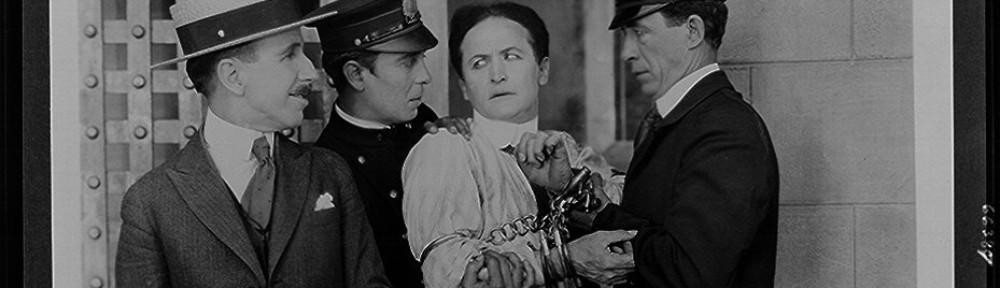
The October 16, 1920 edition of ‘Pictures and Picturegoer’ contained a story adaptation of the Grim Game movie.

Over four posts, I plan to take you inside this edition of ‘Pictures and Picturegoer’ and share each chapter of the story by John Fleming.

Today I share CHAPTER III:

CONTENT MOVED: To be available in my 2024 book: Houdini Adaptations, The Grim Game and Terror Island Stories

Related:

HHCE highlights from Magic Collectors Expo 2023

Tuesday May 9, 2023

Midnight – Arrived “safely”(?) at Cleveland Marriott East for the Magic Collectors Expo (MCE) 2023 after surviving “Spirit” airlines and a “sketchy” taxi ride from Cleveland Airport.

10am–1pm Arrived safely at Rock and Roll Hall of Fame after a pleasant Uber ride. Spent about 3 hours there, going back in time with the legends and history of Rock and Roll.

2pm–4pm Entered the Dealer Room at the MCE and made the rounds. Houdini Nuts, Arthur Moses, Ken Trombly, Joe Hanosek and Roger Dreyer had dealer tables.

  • Started at the mighty Arthur Moses table, where I bought an engraved matted Houdini frame (but the frame was too large to fit in my travel suitcase, lol).
  • Next was Ken Trombly’s table, where I bought a beautiful postcard, which I plan to do a future blog about.
  • Followed by Joe Hanosek’s table, where I picked up his updated notes on Houdini in Columbus Ohio.
  • Then visited with Roger Dreyer about the latest happenings on the Master Mystery project that I helped him research the previous year. Roger graciously gave me some Houdini Beer labels.

4pm–5pm Attended Session #1 where Bruce Averbook, Tim LaGanke, and Lance Rich gave us an overview of what to expect in Cleveland during the MCE.

5pm–6pm Had dinner with John Cox, Scott Wells and another gentlemen at Juicy Seafood. Had a shrimp basket with a Yuengling Beer in honor of my Grandpop in PA; that was his beer of choice.

7pm–8:30pm Attended Session #2.

  • Jim Hagy provided a visually rich overview of the lives and works of early 20 Century Cleveland magicians.
  • Sandy Daily provided the adventures and challenges of a magic collector’s wife.
  • Steve Allan interviewed Gene Anderson, who is known for his marketed version of the Torn and Restored Newspaper, which was a staple of my magic shows when I used to perform. What a treat!

8:30pm Entered the dealer room and picked up the following items:

  • Magicana Magazine with The Escapists articles by Michael Claxton and Gary Hunt (with illustrated items from Fred Pittella’s collection). [Julie Eng Magicana booth]
  • Signed copy of program from The Official Houdini Séance in Providence Rhode Island [Arthur Moses booth]
  • List of Museum, Gallery and Historical Society Displays of Performance Magic Artifacts from Michelle Ainsworth [Joe Hanosek booth]
  • Houdini The Hull Palace Water Torture Poster [Ken Trombly booth]
  • Thurston The Great Magician Poster [Ken Trombly booth]
  • Horace Goldin Hippodrome Poster [Ken Trombly booth]

Clarification, the last 3 items I picked up off the floor after they fell down. Let me explain. I had just finished chatting with Charles Greene, and walked over to Ken Trombly’s booth, where Ken asked if I would take pictures of him sitting at his booth and send them to him later. While I was taking the pictures, Charles Greene walks over and asks if I would like to be in a picture with Ken. I walked around Ken’s table and sat in a chair next to him. Charles told us to move closer and the rest is history. Was I now the owner of a very rare poster collection? I was so embarrassed and felt terrible. Luckily, the posters survived unscathed. Charles then took a picture of Ken and I.

Wednesday May 10, 2023

10am–11am Watched the Thurston/Dante Tribute video.

11:30am–3:30pm

Rode on the bus with Rick Strange (a book collector) who I got to know at the last two MCE’s

Arrived at a Recreation Center near Bruce Averbook’s home, where we had Panera sandwiches, chips & water and great conversation. Met a nice couple (don’t recall their names unfortunately), that shared a photograph of a letter in their collection about Houdini in San Francisco which included Houdini performing at San Quentin and his Thanksgiving dinner with Jack and Charmian London.

Entered Dr. Bruce Averbooks museum, which he and his wife call home. Everywhere you looked, there was magical treasures, which included so much Houdiniana. Each area had experts (e.g., Gabe Fajuri, Fred Pittella, Roger Dreyer, John Cox, Bill Kalush, Mike Caveney, Lupe Nielson, Jim Rawlins and others) describing some of what we were seeing. I was completely overwhelmed. It was the most amazing and beautiful place you could imagine. Bravo to Bruce and his wife for creating and sharing this paradise.

Rode on the bus with Joe and Lisa Patire, who I first met in Scranton PA in 2015.

Entered the beautiful home of Tim LaGanke, which was a museum of Automata. The tour included automata in his home, garage and ended with a magic show outside on the deck. There was even some Houdini related items.

5:30-6:30 While others went to dinner, I hung out with John Cox and discussed my next book, Houdini’s SchoolDays (to be released sometime in 2023) as well the books John is working on.

7pm–8:30pm Attended Session#3

  • Richard Cohn entertained us with his accordion and told the sensational tale of a mystery man named Henry Roltair, a former assistant to Alexander Herrman, magic performer, inventor, vaudeville star, dealer, deal maker, circus star, patent holder, celebrity, businessman and more.
  • Phil Schwartz shared the funny business of magic collecting and suggested ways to insure that your collection does not pass into underserving or unwanted hands.
  • Al Belmont with Bill Smith shared memories of the Blackstone Sr. Show.

8:30-? Went to hotel bar area (that also served Yuengling Beer), had dinner with John Cox, and then we were joined by other Houdini nuts (Gary Hunt, Arthur Moses, Fred Pittella, and Joe Hanosek).

Thursday May 11, 2023

11am–12:30pm Attended Session #4.

  • William Winters presented Walter Gibson, The Man Who Knew Them All, which included Houdini.
  • John Cox presented Houdini in Cleveland. He took us on a fun, well researched, fact-filled tour, where we find out how well Cleveland stacks up against other cities where Houdini performed.
  • David Charvet looked at cars used by magicians of the past, which included Houdini.

12:30 Went to Dealer room and picked up a signed copy of David Charvet’s Conjurers & Their Cars An Album of Motoring Magic. Also got Lance Burton to sign the page on his Vanishing Corvette.

2:30-4pm Attended Session#5 at the MCE.

  • Jay Hunter gave a presentation on Magicians Throw-Out cards, where he shared images of many cards from his impressive collection.
  • Gabe Fajuri of Potter & Potters Auctions gave a presentation on A Half Century Of Magic On The Block. This included auctioning off two items at the end. One of the items was a Houdini signed SAM card.
  • Mike Caveney closed the last session with a presentation on The Otis Litho Company located in Cleveland. Using a file of 140 letters that passed between Charles Carter and Otis Litho, Mike chronicled the creation of a full line of posters that were produced in 1926. The Houdini Egyptian Buried Alive poster was done by The Otis Litho Company.

6:30pm-9:30pm Attended “Cleveland’s Finest Magicians Dinner & Show which was very entertaining. Sat at a table with Michelle Ainsworth, John Cox, Joe Hanosek, Jay Hunter, Rick Strange and others.

9:30-? Went to bar area at hotel and hung out with John Cox, Joe Hanosek, Gary Hunt, Fred Pittella and Rick Strange. And of course our (Joe Hanosek, Rick Strange and I) beer of choice that night was Yuengling.

Thank you to Bill Smith and all his helpers for putting on an amazing Expo.

And thanks to all the people highlighted in bold above that trully made this a wonderful experience.

Related:

The Grim Game Story Adaptation – Chapter 2 of 4

The October 16, 1920 edition of ‘Pictures and Picturegoer’ contained a story adaptation of the Grim Game movie.

Over four posts, I plan to take you inside this edition of ‘Pictures and Picturegoer’ and share each chapter of the story by John Fleming.

  • Chapter I
  • CHAPTER II
  • Chapter III
  • Chapter IV

Today I share CHAPTER II:

CONTENT MOVED: To be available in my 2024 book: Houdini Adaptations, The Grim Game and Terror Island Stories

Related:

The Grim Game Story Adaptation – Chapter 1 of 4

The October 16, 1920 edition of ‘Pictures and Picturegoer’ contained a story adaptation of the Grim Game movie.

Over four posts, I plan to take you inside this edition of ‘Pictures and Picturegoer’ and share each chapter of the story by John Fleming.

  • CHAPTER I
  • Chapter II
  • Chapter III
  • Chapter IV

Today I share CHAPTER I:

CONTENT MOVED: To be available in my 2024 book: Houdini Adaptations, The Grim Game and Terror Island Stories

Related:

Who was the printer and selling agent behind “Adams Press” located at 19 Park Place?

Last week I did a post that first tied Oscar S. Teale and Houdini  to “Adams Press” in 1914 and 1923 respectively.

Today, I share the first page of a July 30th 1924 letter sent to 19 Park Place from Clinton Burgess (who is credited as compiling Elliotts Last Legacy) that reveals who is Adams at “Adams Press”.

Credit: McCord Museum

The above letter is addressed to Frank H. Adams.

Frank H. Adams of “Adams Press” also shows up in a 1894-95 Insurance Year Book:

Happy 149th Birthday!

According to Gresham:

He celebrated his 50th birthday back home on 113th Street with a grand family party…He felt sure he could live to be a hundred.

Well, I would like to think he has surpassed that goal.

HHCE Collection

Today, we celebrate his 149th birthday.

H A P P Y  B I R T H D A Y!

Adams Press connection to Houdini was Oscar S. Teale

Kevin Connolly on his popular Conjuring History FB page asked the following question:

  • Houdini used his home address to conduct various business ventures. Does anyone know why he chose “Adams Press” as a name for the publications he produced?

And Doug Edwards had an excellent answer:

  • Obviously “Adams Press” was a print shop that did print work for Houdini…Their name was on several of Harry’s pamphlets, etc…So when he got mail under their name, he would take it over to them and they would do the printing

As a follow-up, thought I would share (via this post) some additional thoughts and research that first ties Oscar S Teale to “Adams Press”.

You see, not only was Oscar Schutte Teale (1847-1934) an illustrator/researcher/ghostwriter for Houdini, he was also an architect, and he published under the name “Adams Press”.

In 1914, Oscar S. Teale self-published “How to do Architectural Drawing”. “Adams Press” (62 Williams Street, NYC) was the printer and selling agent.

In 1920, he published the book, “Higher Magic – Magic for the Artist” under the name “Adams Press” and used his home address, 240 Broadway, New York City.

In 1923, he started using address 19 Park Place for “Higher Magic – Magic for the Artist”.

1923 was also the year, he illustrated Houdini’s “Elliott’s Last Legacy”, under the name “Adams Press”, but utilized Houdini’s home address, 278 West 113th Street.

HHCE Collection

In 1924, “Adams Press” published a beginning magic book, “Magic and Home Entertainment”, via 19 Park Place address;

HHCE Collection

And also in 1924, “Adams Press” published “Houdini Exposes the Tricks used by Boston Medium Margery” via 278 West 113th Street address.

So by 1924/1925, you could get Teale’s Higher Magic – Magic for the Artist” and a “Magic and Home Entertainment” directly from 19 Park Place.  And Houdini book orders published by “Adams Press” still went to 278 West 113th Street, but were printed at 19 Park Place.

Potter and Potter Spring Magic Auction 5/18/2019 Lot 85 Adams Press Mailer with “Elliotts Last Legacy” Prospectus, New York, 1925 5 pieces, including the original Adams Press mailing cover, addressed to Lewis Duff, a prospectus with order form for Elliotss’s Last Legacy, a sample booklet and bulk order for “Magic and Home Enterntainment{ and a return envelope.

Which just leaves one question, who was the printer and selling agent behind “Adams Press” located at 19 Park Place?

Tune in next week, where I reveal the answer to who is Adams at “Adams Press”.

Houdini Breaks into Playwriting – Buried Alive

Last year I acquired the 1924 newspaper article, Houdini Breaks into Playwriting, describing a new stage play adapted from The Grim Game.

Houdini actually broke into playwriting (if you can call it that) between 1911 and 1914 where he registered three of his famous illusions as “playlets” or short plays, with the U.S. Copyright Office. These deposited scripts are now held within the Reader’s Collection, Library of Congress Copyright Office Drama Deposits.

The three playlets were also published in the Linking Ring [Jun to Aug 1967] and Patrick Culliton’s books, Houdini’s Strange Tales – A Collection of fiction by the legendary Harry Houdini [1992], “Houdini Unlocked”[1997], and “Houdini – The Key” [2010]

Edgar Heyl says: “these plays are unbelieveable bad. Yet Houdini barged right ahead in writing them, completely oblivious of plot, motivation, characterization, credibility, reality and the many other factors that make the work of a professional playwright so difficult.”[Linking Ring August 1967]

This post concludes a 3 part series of posts where I summarize and share tidbits about the three copyrighted plays that he wrote:

Today we look at Buried Alive

Only one copy was deposited and it consisted of 4 small octavo pages typewritten double spaced.

SUMMARY

The premise of this play involves two tourists who try to one-up a local priest by performing a surprising “miracle”. The stage directions describe the tourist in a straitjacket, who is put into an empty box and lowered into the ground with dirt shoveled atop him. After a few chants and incantations, the tourist is revealed “relieved of his bonds, and appearing just as he was before.” The locals treat him as supernatural, but he insists he is a mere man.

[Houdini and the Magic of Copyright by Marilyn Creswell (March 24, 2021)]

Per Cullliton:

Like the other plays in this collection, Buried Alive was not a serious attempt at playwrighting on Houdini’s part. It was just an attempt to protect a new effect from the imitators who had dogged his every step.

The 1914 Buried Alive poster advertising “Harry Houdini’s original creation” goes hand in hand with the play and protecting his new effect.  Note: Elcock did the artwork for the poster. Like the Water Torture Cell escape, the stage version (non-play) of Buried Alive would have to wait until a later date for Houdini to perfect and perform.


Houdini Breaks into Playwriting – Walking Through a Brick Wall

Last year I acquired the 1924 newspaper article, Houdini Breaks into Playwriting, describing a new stage play adapted from The Grim Game.

Houdini actually broke into playwriting (if you can call it that) between 1911 and 1914 where he registered three of his famous illusions as “playlets” or short plays, with the U.S. Copyright Office. These deposited scripts are now held within the Reader’s Collection, Library of Congress Copyright Office Drama Deposits.

The three playlets were also published in the Linking Ring [Jun to Aug 1967] and Patrick Culliton’s books, Houdini’s Strange Tales – A Collection of fiction by the legendary Harry Houdini [1992], “Houdini Unlocked”[1997], and “Houdini – The Key” [2010]

Edgar Heyl says: “these plays are unbelieveable bad. Yet Houdini barged right ahead in writing them, completely oblivious of plot, motivation, characterization, credibility, reality and the many other factors that make the work of a professional playwright so difficult.”[Linking Ring August 1967]

This post continues a 3 part series of posts where I summarize and share tidbits about the three copyrighted plays that he wrote:

  • Challenged or Houdini Upside Down (Copyrighted August 1, 1911)
  • Walking Through a Brick Wall (Copyrighted July 15, 1914)
  • Buried Alive (Copyrighted September 9, 1914)

Today we look at Walking Through a Brick Wall

Houdini purchased the idea on May 4, 1914. The play was written shortly after purchase of the illusion, possibly on the boat coming back from England. Only one copy was deposited and it consisted of 4 octavo sheets typewritten double spaced.

SUMMARY

The plot of this playlet involved a father who constructed a brick wall to keep the son of his “mortal enemy” from being able to look into his garden. The father states, “The day you can walk through the brick wall that separates our houses. I’ll give you my daughter.” The next day the father wakes up to see the young man made it through the wall. To his new fiancée, he explains, “Alice, whether I did or not [walk through the brick wall], everything is fair in love and war. This playlet includes a note after the curtain, which explains the illusion.

[Houdini and the Magic of Copyright by Marilyn Creswell (March 24, 2021)]

Per Culliton:

Houdini didn’t invent this amazing effect. He purchased the American rights from an Englishman named Sydney Josolyne. As usual Houdini had to try to protect the illusion from the plagiarists who had plagued his career and establish that, in the states at least, “Walking Through a Wall” was exclusively his. He accomplished this by copyrighting the playlet.

His lack of playwrighting ability aside, there is some old Houdini genius built into this play. He tells us precisely what the effect involved, and he even tips the secret if one can read between the lines.

Per Edgar Heyl:

I’ll never undestand what Houdini had in mind in writing this ridiculous playlet…that practically told how the illusion had been performed…material filed in the Copyright Office is open to public inspection at any time.

[Linking Ring August 1967]

Per Marlyn Creswell:

Soon others began selling cheap blueprints of the apparatus Houdini used to perform the trick. Even though the copyrightable words and script of Houdini’s playlet were not necessarily infringed, the act lost its appeal once its illusion’s methodology was well-understood. Houdini only performed the trick a few times, and then sanctioned his younger brother, Hardeen’s use of the trick.