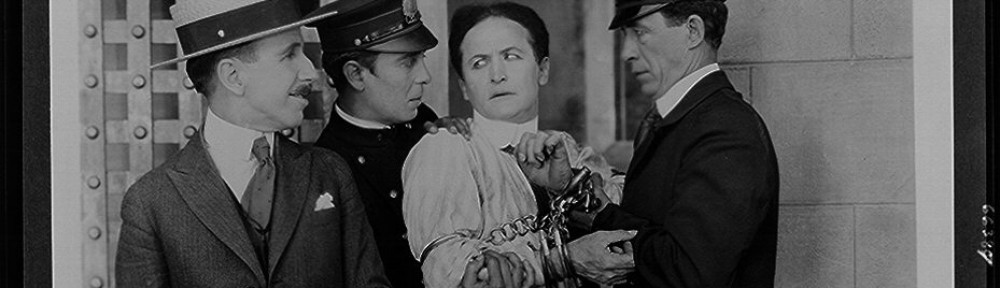
Lovecraft Letter – Astrology, Superstition and Intervention of the Gods

[The following is a post that I wrote in January 2016 to be published at a later date, but based on a post today by John Cox titled, The Cancer of Superstition is FOUND!, which announced that Potter & Potter Auctions will be auctioning off a 31 page unpublished work in progress for The Cancer of Superstition, I thought I would share it now:]

In 1926, the magician Harry Houdini hired Lovecraft and his friend C.M. Eddy, Jr. to write an entire book combating superstition.  This work – perhaps analogous to Houdini’s previous work, A Magician among the Spirits (1924), a debunking of spiritualism – was to be called The Cancer of Superstition.  Houdini had earlier asked Lovecraft to write a rush article on Astrology, for which he paid $75.

houdiniarticlebylovecraftebayauction3

Houdini Astrology Article by Lovecraft

Below is the first part of a letter dated Oct 26, 1926 from Lovecraft to his rumored best friend Frank Belknap Long:

Young Man: –

These occasional outings are, I assure you, most amply earn’d; for I am just now coping with the most hectick reincarnation of David V. Bushism imaginable.  My neo-Bush is our slippery friend Houdini, who was here early in the month, and rushed me to hell preparing an anti-astrological article to be finished before his departure – a matter of five days; for which I received the not wholly despicable renumeration of seventy-five actual dollars.  He says he has a devilish lot more for me to do, and has been trying to get me to meet him in Detroit at his own expense to talk things over – but I have maintained that I can do business best within sight of my native town’s Georgian steeples.  Just now I note in the paper that Houdini has had a breakdown – which must have occurred just after the last letter he sent me – so I fancy there will be a lull in negotiations.  I’ll send him a line of sympathy to jolly him along.  Poor Eddy, who with my aid has been doing some revision for the nimble wizard, is quite worried about his unexpected intervention of the gods.

No historical record exists at this time to suggest that Lovecraft did indeed extend those best wishes to Houdini to “jolly him along”.  If he did send the line of sympathy, it didn’t work, for five days after the letter was written, Harry Houdini would pass away.

Houdini’s untimely death on October 31, 1926 derailed the plans for the Cancer of Superstition book, as his widow Bess did not wish to pursue the project.  That said, parts do survive.  In 1966, Lovecraft’s detailed synopsis for “The Cancer of Superstition” and “The Genesis of Superstition” part written by Eddy was first published.

It was originally thought that the astrology article did not survive, but in April 2009, HP Lovecraft’s unpublished astrology essay for Harry Houdini surfaced and sold on eBay [item 120404416969]  for more than a solid five grand.

The guy who won the item is a Lovecraft guru in Utah and is on every Lovecraft panel at various conventions.  He bought it because he recognized the historical significance. Interestingly, this article was unknown for so long because magic collectors were passing it around because it had Houdini’s signature on it. There was talk that the winner might sell it to Brown University Lovecraft collection.

HPLHoudini12A438EBAY_zpsad8ce55d

However, on August 16th, 2013, the first of the astrology hand-written pages started to be sold on eBay [item 370716061710].  The listing implied that each page would be offered for sale except for the last page signed by Harry Houdini, which would be kept by the seller.

Does anyone have any updates on the whereabouts of these pages?

It would be nice if copies of these pages on Astrology were published.

Source:

  • Collected Essays Volume 3: Science – Edited by S.T. Joshi
  • Selected Letters II – H. P. Lovecraft
  • eBay

KINO Master Mystery Contents

TMM KinoAs promised, I am going to review each incomplete version of the Mastery Mystery (i.e., The Miracle Factory, Kino, McIlhany and UCLA FTVA) that I have seen and go over what pieces they contain and don’t contain.  This post will focus on The Kino International DVD released in 2008.

The 1918 original was slightly longer than 5.5 hours. The back of the Kino DVD case implies “that portions of THE MASTER MYSTERY no longer survive today.  The Kino edition runs almost four hours, and bridges the missing passages with explanatory text.”

Below is the explanatory text that appears on the DVD:

The remainder of episode three exists in fragmentary form.  Surviving footage of the Baker’s dock sequence suffers severe nitrate deterioration.  It is presented here by special arrangement with the George Eastman House.


A second thug, an expert swimmer, hurls himself into the fray to finish the task that cost the other his life.


In episode four, Locke investigates the emissaries by posing as a prison inmate.  He intercepts a secret message, but is accidentally locked in the cell.  Employing his escapists talents, Locke frees himself and (dressed as one of the emissaries), infiltrates the gang.  He is soon unmasked and dangled by his heels over a vat of acid.


In episode five, Locke decides to test a “self-liberating diving suit,” with Eva’s assistance. Beneath the waters of a nearby cove, he is shocked to encounter another diver.  The fellow diver draws a long knife and, “There, under the sea, commenced a battle royal.”  The underwater assassin severs Locke’s oxygen tube, but Locke manages to escape the water-filled suit.


The ingenious diving suit is reclaimed by a boatman, but when Locke goes to retrieve it, he falls into another of the emissaries’ traps.


After escaping the packing-crate, Locke is apprehended, bound and placed in a tank, which is steadily being filled with water (thus concluding episode five).


Episode six concludes with Lock [Locke] once again a captive of the emissaries, being strapped into the “Chair of Death”.


[End of episode 10] “During the mock wedding ceremony, Locke’s body is hidden inside a couch.  The Madagascan stabs the couch, presumably killing the man within. “


“In episode eleven, it is revealed that Locke avoided the blade of the Madagascan’s knife. Locke tracks the criminals to a fisherman’s shack.  His efforts to arrest the emissaries are thwarted by an old hags and he is wrapped in a fishing net, while the automation stalks Eva.”


The Kino DVD also has the following disclaimer title cards before it starts:

“THE MASTER MYSTERY was first released

in 1919 as a fifteen-chapter serial.


Portions of the film have been lost.


To compensate for the missing footage,

various distributors condensed and

rearranged the episodes to give the film

the illusion of completeness. “


This edition restores the episodes and

surviving fragments to their proper sequence,

using as a blueprint the published novel and

documents in the archives of the

New York Censor Board.


The Kino Video version was thought to contain chapters 1, 2, 7, 8, 9, 13, 14 and 15 in complete form and fragments from chapters 3, 4, 5, 6, 10 and 11.

Episode 1 is almost complete except for a couple of close-up shots (e.g., note written to Locke and a note written to Brent) that appear in the original.

And episode 2 that was thought to match the original does not.

Episode 2 includes the straitjacket and Houdini tied to the wall with rope, but does not include Houdini escaping from wall and the Baker’s Dock Chain escape until Episode 3 [both appear in Episode 2 in the original]. The Baker’s Dock sequence footage from Harry Ransom Center also suffers severe nitrate damage on the Kino version.  A more complete version exists without severe nitrate damage.

Most of episodes 3, 4, 5, and 6 are missing which includes the jail escape, vat of acid escape, diving suit, underwater footage of packing crate escape and water tower escape.  Although part of the vat of acid escape appears in “The Censor’s Report” which is part of the Special Features on the DVD.

Episode 7 is complete except for a few missing original title cards throughout.

Episode 8 appears complete.

Episode 9 is complete.

Episode 10 appears to be almost complete except for the end and Episode 11 is completely missing.

Episodes 12, 13, and 14 are complete.

Episode 15 is almost complete except for a close-up shot (i.e., note written to Locke) that appeared in the original.

Next week, we take a closer look at the William H. McIlhany Special Edition Master Mystery Contents.

Related:

The Miracle Factory Master Mystery Contents plus Escapes

TheMiracleFactoryMasterMysteryDVD

As promised, I am going to review each incomplete version of the Mastery Mystery (i.e., The Miracle Factory, Kino, McIlhany and UCLA FTVA) that I have seen and go over what pieces they contain and don’t contain.  This post will focus on the Master Mystery Escapes and The Miracle Factory DVD released in 2015.

The back of the DVD case states:

Nearly three hours long, this compilation includes the surviving footage of The Master Mystery, although several gaps in the story remain.

Well, the 1918 original was slightly longer than 5.5 hours and the Kino DVD that was released in 2008 was almost 4 hours.  Let’s take a closer look at The Miracle Factory DVD and compare it to Kino and the 1918 original release.

The DVD starts with a special escapes feature:

“For the viewing convenience of magicians and magic historians, we have compiled all of Houdini’s escape segments from The Master Mystery here.”

It includes:

  • Lockpicking, “Call the police! Break down the door!”
  • Handcuff release, “As acting head of the Corporation, I demand this man’s arrest!”
  • Straitjacket escape – Bound in a straitjacket brought by an ambulance which came to remove Locke to the sanitarium
  • Underwater crate [with most of the underwater footage] – Locke goes to an old warehouse dock, where he is abducted by emissaries of the automation, shackled, put in a crate, and thrown off a dock.
  • Electric chair – Locke is strapped into the electric chair which means certain death.
  • Barbed wire and acid, “In the path of deadly acid.”
  • Elevator rope escape, Quentin Locke, at the command of the Automation, is overcome, bound, and thrown beneath a descending elevator, while Eva has been abducted.
  • Strangulation torture – Eva and Locke are led into a trap at the Chinese Curio Shop, and are attacked by the automation and its emissaries. Locke is strapped to a wall.
  • Fishing net – Quentin Locke while in pursuit of Paul is overpowered by the emissaries of the Automation and entangled in the meshes of a fishing net — while Eva is left helpless before the advance of the Automation.
  • Noose – Zita and Locke rush to the hypnotist to save Eva, and Locke finds himself trapped in a noose, suspended over a fire trap.

After the escapes feature, the movie is introduced with the following three Title Cards before it starts:

The Master Mystery

B.A. Rolfe Productions

Octagon Films

1919


“Aside from his 1901 Pathe short filmed in Paris, the 1919 15-episode serial The Master Mystery truly introduced Harry Houdini as a prominent film star.  Portions of the series have been lost.  The following include the majority of the remaining footage.  We hope you will ignore the lapses in the storyline and still enjoy this historic series. “


B A ROLFE

Presents

HOUDINI

In

THE MASTER MYSTERY

Episode 1 matches Kino and is complete except for a couple of close-up shots (e.g., note written to Locke and a note written to Brent) that appear in the original; Episode 2 is missing footage from Kino including HH tied to wall with rope and shows Baker Dock scene with Packing Case as opposed to Baker Dock scene where he is thrown in the river with chains.  However the Packing Case scene does contain underwater footage which is missing on Kino. The Packing Case scene is not supposed to appear until the end of Episode 4 and the beginning of Episode 5.  So Episodes 3 thru 6 are missing with the exception of some of the packing case escape footage which is followed by some very brief footage of HH being put in electric chair. Episode 7 matches Kino and is complete except for a few missing original title cards throughout the episode. Episode 8 appears complete and matches Kino. Episode 9 is missing a lot of footage and spoken title cards that appears at the beginning of Kino. Episode 10 is almost complete except for the end and Episode 11 is completely missing just like on Kino. Episode 12 starts with the fishing net sequence, and appears to be complete and match Kino.  The DVD ends after episode 12 with the statement: “End of existing footage”.  Episodes 13, 14 and 15 are missing.

So the major contribution of the Miracle Factory was the Special Escapes-Only Feature that gathered the footage of Houdini’s Master Mystery escapes into an introductory section for the viewing convenience of magicians and historians.  However, it is missing two and half hours of the story which include the following escapes:

  • Tied to wall escape – While unconscious, emissaries lift his limp body and tie him to nails in the wall then they manacle his hands and ankles.
  • Baker’s Dock chain escape – Locke is thrown from the dock by henchmen while bound and shackled in chains.
  • Jail escape – Emissary caught and sent to jail. Per Locke’s plan to get to the automation at the acid mills, he occupies the next cell, stares at keyhole and you see an x-ray view of the lock as his mind causes the bolt to open and he switches places and clothes with the emissary who is about to be freed.
  • Vat of acid escape- Locke is suspended over a seething vat of acid with Eva unwittingly the key to his demise should she open the door to where Locke has been shackled.
  • Diving Suit escape – Locke decides that one of the patents, for a diving suit, must be tested. He knows that if anything happens to his airline, it would mean certain death.  The automation sends one of his emissaries underwater to cut Locke’s airline.
  • Water Tower Escape – Deluxe Dora and her henchmen take Locke to the roof, and tie him to the bottom of a water tower. When water begins pouring in, it looks like certain death.
  • Sofa escape – Locke bound and placed under the coverings of a sofa

Next week, we take a closer look at the Kino Master Mystery Contents

Related:

I have finally seen all of The Master Mystery

filmfun346356lesl_0374

I have seen many different (incomplete) versions of The Master Mystery including:

  • The Miracle Factory version on DVD
  • Kino International version on DVD
  • William H. McIlhany Special Edition version on VHS
  • UCLA FTVA version on VHS

And I am happy to report that among these incomplete versions, we can now piece together a complete 15 episode Master Mystery serial as it first appeared in 1918.

master mystery episodes 1 to 9master mystery episodes 10 to 15

Coming up in separate posts, I will review each version of the Master Mystery (i.e., The Miracle Factory, Kino, McIlhany and UCLA FTVA) and go over what pieces they contain and don’t contain.

How Many Times did Houdini Escape from a Giant Football?

Football 001Since today is Super Bowl Sunday, I thought I would share the two times that I am aware of that Houdini escaped from a Giant Football:

During an engagement at the Keith’s Theatre, a Boston sporting goods manufacturer had challenged Houdini to escape from a giant football.  The magician was stuffed inside and a chain was passed through the eyelets and padlocked.  After twelve minutes, Houdini reappeared, somewhat disheveled; but the ball appeared untouched, the stitching was intact.   Years later, he repeated the stunt in Pittsburgh and had the entire University of Pennsylvania football squad carry the huge pigskin up the aisle and onto the stage.

The University of Pennsylvania football team was matched against Houdini on the stage of Keith’s Chestnut Street Theater in Philadelphia on January 4, 1907.  The entire squad, in gridiron uniform, jogged down the aisle with a giant football (manufactured by the A.J. Reach Company) and lifted it up behind the footlights.  They then manacled Houdini, bent him double to fit inside the opening of the ball.  The handcuff king couldn’t turn around inside the football. The pigskin was laced with a brass chain and padlocked.  The ball and Houdini was rolled into his curtained cabinet. Harry was out in thirty-four minutes.

Source:

  • Houdini The Key by Culliton
  • Houdini The Untold Story by Christopher

BONUS:

The following cut sequence is from the blue pages of the 1st PRELIMINARY GREEN April 23, 1952 Philip Yordan script for the Tony Curtis Houdini movie:

  1. WASHINGTON, D.C. SEQUENCE

On the stage at Keith’s theatre, eleven members of the Yale Football Team, wearing the football uniforms of the period, cart a giant leather football on to the stage.

H, clad only in bathing trunks and securely manacled, is put into the football through the opened lacing, then the players lace it up tightly.

A screen is put around the football.  The football players ring themselves around the screen to make sure no outside assistance can be given H in his escape.

The orchestra plays the Yale Alma Mater Song.  The audience is full of college students.

Suddenly H, wearing a Yale football uniform, comes running down the aisle from the back of the theatre, waving a pair of Yale pennants, to the amazement of the team and the audience.

On stage the football players pull away the screen revealing that the football is still tightly laced.

The audience goes wild.

Deep Sea Loot 1919

houdini-boys-cinema-rev-cropped (1)

Deep Sea Loot is listed on the back of the 1922 Boys Cinema Card.  Chief among his films are:  “The Master Mystery”, “The Grim Game”, “Deep Sea Loot” and “Terror Island”.  Notice that Deep Sea Loot appears after The Grim Game that was released in 1919 and before Terror Island which was released in 1920.

According to Picture Play Magazine [Mar-Aug 1921], some of his pictures are  “The Master Mystery,” “The Grim Game,” “The Deep-Sea Loot,” and “The Adventures of Houdini in Paris.”

According to The Lincoln Star [Sun Aug 20 1922], he has made several pictures before “The Man From Beyond,” among them are “The Master Mystery,” “The Grim Game,” “Deep Sea Loot,” “Terror Island,” and Adventures of Houdini in Paris”.

And Deep Sea Loot  for Famous Players Lasky Corp,  1919 was included in Houdini’s typewritten list of screen credits.

HRC HH Movies List 001

Credit: Harry Ransom Humanities Research Center

But, according to Disappearing Tricks by Matthew Solomon, during the 1910s [1917] Houdini worked with underwater filmmakers J.E. and Ernest Williamson on a never-completed film (prospectively titled Houdini and the Miracle) that promised to show Houdini’s escape from a photosphere (an observation chamber that housed a camera that was attached to the bottom of a barge by a long tube).

According to ” a full page ad in The Moving Picture World on May 5, 1917, “Houdini’s Sub-Sea Miracle” was supposed to be released in November 1917 as the Williamson Brothers second film of that year.

Moving Picture World Volume 32 Apr-Jun 1917 p731

Solomon also mentions that the Houdini and the Miracle [1917] film project was included in Houdini’s typewritten list of screen credits as Deep Sea Loot [1919] but was never made [completed].

What intrigued me was the 1917 date versus a 1919 date, the Williamson Brothers versus Famous Players Lasky Corp and the following 1919 Houdini letter from the Fred Pittella collection:

Nov 2 1919

Dear G Kirby

We are on location and expect to return to Los Ang end of week.

…

I am doing under water swimming getting ready for my “Deep Sea Loot” story.

This morning I did five tests each running over two minutes which is not bad at this stage as it means 3 minutes next week.

Kindest regards,

Houdini

So, in November of 1919, it is my understanding that Houdini was at Catalina Island working on submarine scenes for Terror Island [Deep Sea Loot?].   [Wid’s Daily Dec 1, 1919]

In December, the players were transferred from Catalina Island to an island off the coast of Lower California. At this island, which has a South Sea atmosphere practically all of the remaining exterior scenes were filmed. [Motion Picture News Dec 6 1919]

According to Kalush p 354 and 355:

By July of 1917, three months after signing a contract, Houdini was still hashing out the script with the Williamsons.  Both the war in Europe and a war between the Williamsons derailed the project.  Desperately trying to salvage  his film, Houdini entered into an arrangement with a company called Westart to film the opening scenes of his scenario, a manacled jump into the sea off the pier at Atlantic City.  Though Westart would in a few years produce a series of low-budget Westerns, this one-day shoot appears to be all that became of The Marvelous Adventures of Houdini.

According to Solomon’s notes:

Elements of this story [“The Marvelous Adventures of Houdini, the Justly Celebrated Elusive American”, aka “Houdini and the Miracle”], especially its focus on underwater action [“Deep Sea Loot”], found their way into “Terror Island” a few years later.

So in 1919, did Harry Houdini shoot scenes for “Deep Sea Loot” and “Terror Island” or are they one in the same?

Special Thank You to Fred Pittella for allowing me to share the contents of a letter dated Nov 2, 1919 from his personal collection.

Houdini Movie Short – The Annual Harry Houdini Seances – Sonoma County, CA

HH Seances Sonoma Documentary DVDI recently acquired a DVD on eBay of The Annual Harry Houdini Seances – Sonoma County, CA.  This is the documentary by Tom Wyrsch that first screened at the Boulevard Cinemas in downtown Petaluma on November 3, 2012 and then premiered October 30, 2014 on the PBS station KRBC in Northern California.

From 1964 to 2002 authentic Harry Houdini Seances were held each Halloween Night in Sonoma County, California.  This documentary film tells the story of how the séances started, the secret locations where they were held, the people who attended, and if contact was made.  It was a 37 year annual Halloween event not to be forgotten.  Interviews, music, photographs, film footage, and narration tell the complete story.

Special Features on the DVD included:

HH Seances Sonoma Documentary Special Features DVD backWilliam Alstrand Tribute:

According to the DVD, William Alstrand was a San Francisco area professional stage show magician.  Mrs. Houdini entrusted Bill the secret coded message she and her husband had created in order to prove whether or not Houdini was really breaking through from the afterlife.

Alstrand attended many of the Sonoma County Seances despite his Houdini Séance experience on Halloween of 1954 where he said “never again”:

The_San_Bernardino_County_Sun_Wed__Nov_3__1954_

Houdini Movie Short:

I was curious to see what footage from The Master Mystery made up the Houdini Movie Short and if it included any missing footage.   Although not identified as such, it was obvious to me that this was footage from Episode 15, Bound At Last.   A quick check online confirmed my suspicion, that this was indeed Episode 15 which is not missing any footage as far as I know.

The DVD has a 2012 copyright from Garfield Lane Productions.

Lovecraft, Eddy and possibly Houdini’s Last Letter

Howard_Phillips_LovecraftCM EDDY JR

Lovecraft, Eddy and possibly Houdini’s Last Letter

According to Kalush:

In Providence, the next stop of the tour [Oct 4-9], Houdini and Bess went to dinner with H.P. Lovecraft and Clifford Eddy Jr.  Both men were working on a book for Houdini called “The Cancer of Superstition” but Eddy was also an undercover operative for Houdini, filing many field reports on his visits to fraudulent mediums.

…

Shortly after meeting with Eddy and Lovecraft, Bess was stricken with a non-specific form of poisoning, probably from food.  Houdini immediately summoned Sophie Rosenblatt, a nurse who had worked for the family previously; but by Friday, October 8, Bess’s condition had deteriorated so badly that Houdini stayed up all night comforting her.  She improved a little the next day, which was the last day of the run, so Houdini arranged for her and Sophie to leave straight for Albany, the next tour stop, while he took a late train to New York, where he had meetings scheduled for Sunday [Oct 10].

…

When the meetings concluded, he checked in with Rosenblatt in Albany and decided to postpone his train back. At some point after midnight, Houdini called his friend Joe Dunninger, the mentalist [to pick him up in the car]

…

“I’ve seen my house for the last time, Joe. I’ll never see my house again.”

According to Koval:

  • Oct 4-9: Providence Opera House, Providence, RI
  • Oct 11-13: Capital Theatre in Albany.  Houdini suffers a broken ankle [Oct 11 according to Wissner]
  • Oct 14-16: Van Curler Theatre Schenectady, NY
  • Oct 18-23: Princess Theatre, Montreal, Canada”
  • Oct 22: Houdini is struck in stomach [and sends a letter to Mr. Eddy]
  • Oct 24 (only): Garrick Theatre, Detroit, MI  Houdini collapses after his show.
  • Oct 31:  Houdini dies

According to a short letter in Fred Pittella’s collection, dated October 22 and sent from Shubert-Princess Theatre to Mr. Eddy in Providence R.I.:

My dear Eddy:

On account of accident which has laid me up, I cannot do much writing.

Will answer in detail from Detroit.

Best wishes.

Sincerely yours, Houdini.

I find it interesting he uses the word “accident” and that “on account of accident“, Houdini can’t do much writing [about the Cancer book], but feels he will be able to “answer in detail from Detroit” where he was scheduled to perform at the Shubert-Garrick Theatre the weeks of October 24 and November 2nd.

Is he talking about the accident in Albany or Montreal?

Note: Houdini’s untimely death on October 31, 1926 derailed the plans for the Cancer of Superstition book, as his widow Bess did not wish to pursue the project.  That said, parts do survive.  In 1966, Lovecraft’s detailed synopsis for “The Cancer of Superstition” and “The Genesis of Superstition” part written by Eddy was first published.  Future posts will describe these and evidence of additional parts that survive.

Special Thank You to Fred Pittella for allowing me to share the contents of a historic letter dated Oct 22, 1926 from his personal collection.

Source:

  • Kalush – The Secret Life of Houdini
  • Koval – The Illustrated Research Diary
  • Pittella Collection – Letter from Houdini to Eddy dated October 22, 1926
  • Wissner – The Houdini Correspondence File

Related: