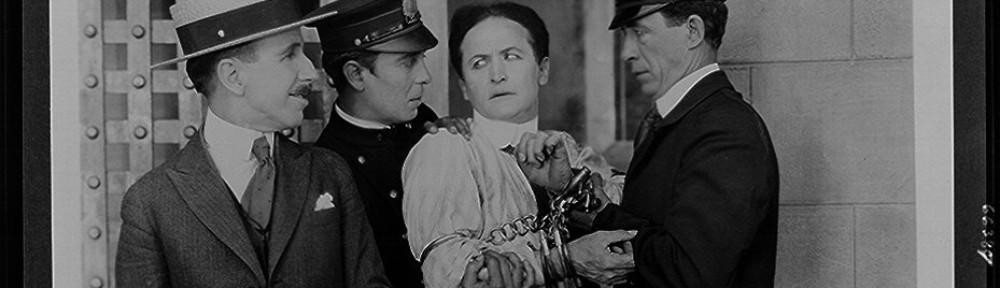
Boys Cinema July 30 1921 v4 n86

Boys Cinema ran every week from Dec 1919 (n1) to May 1940 (n1063). Houdini appeared in 1920, 1921, 1922, and 1923 issues:

  1. Jan 17, 1920. v1 n6. “Houdini the Handcuff King”  cover & p26.  (HHCE Collection)
  2. Feb 21, 1920. v1 n11. “Houdini”  p12+.  (HHCE Collection)
  3. Jan 8, 1921. v3 n57. photo  p5. (HHCE Collection)
  4. Feb 5, 1921. v3 n61. photo p26. (HHCE Collection)
  5. Feb 19, 1921. v3 n63. photo  p5. (HHCE Collection)
  6. May 7, 1921. v3 n74. “The Grim Game”  p14. (HHCE Collection)
  7. May 14, 1921. v3 n75. “Terror Island”  cover & p2+.  (HHCE Collection)
  8. June 25, 1921. v4 n81. “The Grim Game”  p14+. (HHCE Collection)
  9. July 30, 1921. v4 n86.  “The Marvelous Houdini” (photo feature)  p14+.  (HHCE Collection)
  10. March 4, 1922. v5 n117. Houdini card on cover.  (HHCE Collection)
  11. March 25, 1922. v5 n120. Houdini cover with Famous Heroes Card # 4 insert. (Missing)
  12. Jan 13, 1923. v6 n162. “Houdini In The Man From Beyond”  p14+.  (Arthur Moses Collection)

This week I share Houdini’s appearance in Boys Cinema July 30, 1921. v4 n86 from my personal collection.

Boys Cinema June 25 1921 v4 n81

Boys Cinema ran every week from Dec 1919 (n1) to May 1940 (n1063). Houdini appeared in 1920, 1921, 1922, and 1923 issues:

  1. Jan 17, 1920. v1 n6. “Houdini the Handcuff King”  cover & p26.  (HHCE Collection)
  2. Feb 21, 1920. v1 n11. “Houdini”  p12+.  (HHCE Collection)
  3. Jan 8, 1921. v3 n57. photo  p5. (HHCE Collection)
  4. Feb 5, 1921. v3 n61. photo p26. (HHCE Collection)
  5. Feb 19, 1921. v3 n63. photo  p5. (HHCE Collection)
  6. May 7, 1921. v3 n74. “The Grim Game”  p14. (HHCE Collection)
  7. May 14, 1921. v3 n75. “Terror Island”  cover & p2+.  (HHCE Collection)
  8. June 25, 1921. v4 n81. “The Grim Game”  p14+. (HHCE Collection)
  9. July 30, 1921. v4 n86.  “The Marvelous Houdini” (photo feature)  p14+.  (HHCE Collection)
  10. March 4, 1922. v5 n117. Houdini card on cover.  (HHCE Collection)
  11. March 25, 1922. v5 n120. Houdini cover with Famous Heroes Card # 4 insert. (Missing)
  12. Jan 13, 1923. v6 n162. “Houdini In The Man From Beyond”  p14+.  (Arthur Moses Collection)

This week I share Houdini’s appearance in Boys Cinema June 25, 1921. v4 n81 from my personal collection.

Boys Cinema May 14 1921 v3 n75

Boys Cinema ran every week from Dec 1919 (n1) to May 1940 (n1063). Houdini appeared in 1920, 1921, 1922, and 1923 issues:

  1. Jan 17, 1920. v1 n6. “Houdini the Handcuff King”  cover & p26.  (HHCE Collection)
  2. Feb 21, 1920. v1 n11. “Houdini”  p12+.  (HHCE Collection)
  3. Jan 8, 1921. v3 n57. photo  p5. (HHCE Collection)
  4. Feb 5, 1921. v3 n61. photo p26. (HHCE Collection)
  5. Feb 19, 1921. v3 n63. photo  p5. (HHCE Collection)
  6. May 7, 1921. v3 n74. “The Grim Game”  p14. (HHCE Collection)
  7. May 14, 1921. v3 n75. “Terror Island”  cover & p2+.  (HHCE Collection)
  8. June 25, 1921. v4 n81. “The Grim Game”  p14+. (HHCE Collection)
  9. July 30, 1921. v4 n86.  “The Marvelous Houdini” (photo feature)  p14+.  (HHCE Collection)
  10. March 4, 1922. v5 n117. Houdini card on cover.  (HHCE Collection)
  11. March 25, 1922. v5 n120. Houdini cover with Famous Heroes Card # 4 insert. (Missing)
  12. Jan 13, 1923. v6 n162. “Houdini In The Man From Beyond”  p14+.  (Arthur Moses Collection)

This week I share Houdini’s appearance in Boys Cinema May 14, 1921. v3 n75 from my personal collection.

This extremely rare issue of Boys Cinema takes The Terror Island Film Script (which I have seen, read and studied at the Margaret Herrick Library) and adapts it to a story paper format. It is broken up into 8 parts, which you can read below.

  1. A Prisoner Among Salvages.
  2. A Wonderful Submarine.
  3. An Offer Refused and One accepted.
  4. The Sham Fire.
  5. A Life in the Balance.
  6. Sent to a Watery Grave.
  7. The Rescue.
  8. On the Cannibal Island.

Two reels of Houdini Film “Lost and Found” at Sherman Grinberg Film Library

Sherman Grinberg Film Library (Lance Watsky)

Last year (Dec 2019), I received the following email from our friends Dick Brookz and Dorothy Dietrich (D&D) at the Houdini Museum in Scranton:

Hi Joe,

Just got 14 minutes of digital Houdini film highly watermarked to protect ownership

.Each reel is about seven minutes

One is Houdini hanging from a bed sheet from a 4 story building, swinging from window to window swinging over to a drain pipe and lowering himself to the ground.  It is in broken segments as it was filmed.

The other is various clips we have seen small part of before but these are more lengthy.  One lowering a person on a shipment, and kissing Bess, a couple quickies wit Harry Kellar, Houdini taking a bow, the putting him a crate and dumped overboard, him being tied up by a gang of monks, etc.

Any thoughts?

Dick Brookz and Dorothy Dietrich

Without seeing the film clips, my initial thought was that they all sound familiar and that there is a “hanging from a bed sheet” scene in The Man From Beyond (TMFB).

Meanwhile, D&D let Lance Watsky at Sherman Grinberg Film Library know I was an expert on Houdini Films, and got permission for me to study and review the two reels, which I did in December 2019.

It turns out, I had gotten a gimpse of the two reels once before, when Librarian Bill Goodwin shared them at our Houdini Nuts gathering at the Magic Castle (June 2018), but at the time was not allowed to describe what I saw, nor study the films.

Well, thanks to Sherman Grinberg Film Library (Lance Watsky), Dorothy Dietrich & Dick Brookz, John Cox (Wild About Houdini), and the Academy of Magical Arts (Magic Castle), we can now share what’s on them to a larger audience.

In fact, on the Magic Caste website (August 20, 2020), AMA Trustee Shoot Ogawa presented Episode 37, “Behind The Bookcase” with guests John Cox and Lance Watsky, who showed the world premiere of this recently discovered film footage of Houdini.

The quality of this footage is amazing, which is important. Lance Watsky believes the film Sherman Grinberg Film Library owns was struck from a copy of an orginal 35mm negative.

Here’s a breakdown of the Houdini Footage on Reel 1.

Monk Table Tie Escape (0:00:00)

This is footage of Houdini doing an escape on the set of Haldane of The Secret Service. This is not from the movie itself. The scenario appears to be that he’s being challenged by monks (played by actors and assistants.) This is the same cut footage that has appeared in documentaries, but is of much higher quality. The uncut version shows the full escape and Houdini being raised up on the of the shoulders ecstatic monks.

Houdini, Kellar and Hardeen (0:01:48) 

This is familiar footage of Houdini shaking hands with Kellar, and then the two getting into backseat of car driven by Hardeen. But, because of the high qualify of the footage  (and John Cox going thru frame by fame), we now know that this is Kellar being picked up at the Hotel Astor in Times Square New York and being driven to Flatbush, N.Y during the week of Nov. 5-11 1917 (most likely Nov 10, 1917 the day before Houdini hosted the Antilles Benefit at the Hippodrome).


Houdini and Kellar Rope Ties (0.02:15) 

This footage (found on Film-Flamming and other documentaries) was shot in front of Dash’s house in Flatbush (where Houdini and Bess was living at the time). Per Bill Goodwin, the footage is so clear you can read the address on the porch; Houdini and Kellar are seen taking turns demonstrating rope ties. You also see a shot of Bess with Kellar and Houdini in front of the house. As well as Kellar having fun demonstrating his famous Kellar rope tie escape by having Houdini and Hardeen tie his wrists.


Behind the Scenes filming of The Man From Beyond (0.03:21)

You see Houdini rehearsing a scene on a vessel and then consulting with Burton King about the scene. You also see the famous footage of Bessie “sprucing up” Houdini and getting a little smooch from him.


Master Mystery Packing Case (0.05:02)

This is familiar footage from the Master Mystery movie of Houdini doing a Packing Case escape.


Miscellaneous (0.06:15)

This is familiar footage of Houdini in white bathing suit handcuffed with 4 pairs of handcuffs.  You then see Houdini surfacing and resurfacing with the handcuffs, checking to see they got some good shots.

So the footage on Reel 1 has appeared on documentaries and much of it is available on YouTube (at a much lower quality).


Now Reel 2 is unique and has never appeared on any any known Houdini movie, nor documentary for that matter.

Scaling a Building (0:00:00)

Houdini is hanging from a bed sheet from a 4 story building, swinging from window to window swinging over to a drain pipe and lowering himself to the ground. It is in broken segments as it was filmed.

(0.00.00) We see Houdini opening the shutters of the top window of a 4 story building and looking around. He then pulls out bed sheet’s tied together and hooks them to the window. Houdini then puts his left leg outside the window and grabs the bed sheet ladder.

(0.00.47) We see the bed sheets hang down to the bottom of the second window. Houdini grabs the bed sheet ladder and starts climbing down. He kicks open the right shutter of the second window below and climbs down grabbing hold of the left shutter. He then swings himself attached to the shutter and bed sheet to the adjacent window where he grabs the right shutter and lets go of the bed sheet ladder. He then swings the right shutter close while grabbing the left shutter.

(0.01:50) We see Houdini holding onto a drain pipe and then dropping to the ground and walking away.

(0.01.59) Similar to (0.01:50) footage.

(0.02:06) We see back of Houdini from the waist down on the drain pipe jumping down and walking away.

(0.02:14) Similar to (0.02.06) footage

(0.02:25) We see back of Houdini’s head and hand on drain pipe looking down before he starts to climb down.

(0.02:30) Similar to (0.02:25) footage

(0.02:41) We see Houdini from the waste up climbing down the drain pipe and jumping down.

(0.02:54) We see most of Houdini climbing down the drain pipe and jumping down and walking away.

(0.03:03) Similar to (0.02:54) footage

(0.03:12) Similar to (0.00:00) footage.

(0.03:52) We see Houdini on adjacent window after he let go of bed sheet ladder and shutter of adjacent window. And then we see him make his way to the next adjacent window shutter and then the drain pipe. He then climbs down the drain pipe pass two stories of windows until he reaches the ground.

(0.05:30) We see Houdini at the top window going down the sheet ladder to window below, swinging over to the adjacent window, and from there swinging over to another adjacent window.

(0.06:36) We see Houdini swinging over to another adjacent window, transfer to drain pipe and then slide down the drain pipe.

So where is this footage from?

This footage is not from The Grim Game (TGG).

Although, the TGG synopsis for the scenario writer had Houdini escaping from a jail, then using the rope of a flag pole from the building to scale down each story; arriving on each window ledge, he cuts off the end of the rope, ties it to he cell bar on the window and lowers himself again. TGG script also had Houdini freeing himself from a strait-jacket, swinging like a pendulum at the end of a rope, catapulting his body through a small window, and then scaling a wall and disappearing over the other edge.

Escaping and scaling buildings definitely was a theme in some of his movies.

And Houdini was also known to do “human fly” stunts.

Per a Wild About Houdini post:

He climbed the exterior of 278 to bring Bess flowers on their anniversary. He performed at least one human fly stunt during his return tour of the UK in 1920, when he climbed to the top of a castle in Newcastle and dangled from a parapet.

Houdini also shot random scenes in London, Edinburgh and Paris for a movie he was going to call The Dupe. Some of that footage was later used in Haldane of the Secret Service. But some footage was never used.

This footage is not from the TMFB or is it?

The Man From Beyond (TMFB)

Well, The “hanging from a bed sheet” used in TMFB is totally different. But after examining screenshots of Houdini in each of his known films, I came to the conclusion that the “hanging from a bed sheet” footage on reel 2 resembles Houdini during the making of TMFB. And that he filmed two different escapes from sheets, and the one on reel 2 was not chosen for TMFB.  John Cox concurs and also points out that because of how clear the film is, you can tell that a haness and stunt double (Bob Rose?) was used.

Susposedly, Bob Rose was an uncreditied stunt double for Houdini. Below are a couple related newspaper references:

In all that time, I have never been in a hospital. That may be destiny- or it may be a close adherence to the precepts laid down for me by my teacher, the greatest stunt man of them all – Houdini. [30 Sep 1934 LA Times article by Bob Rose]


It was the first time he [Bob Rose] had ended in a hospital. He had always stuck to the rules laid down to him by Houdini who said, “Do every stunt scientifically. Don’t do it on nerve . Don’t attempt a stunt if you are afraid. Stunt work must be done on the same basis as gambling. You’ve got to have a feeling that it is a cinch or you must not do the stunt.” [04 January 1936 Larne Times]

Houdini wrapped up TMFB (and Haldane) in 1921.

The Man From Beyond (TMFB)

Special Thanks to Sherman Grinberg Film Library (Lance Watsky), Dorothy Dietrich & Dick Brookz, John Cox, and the Academy of Magical Arts for allowing me to review and comment on this extroadinary footage.

Update:

The film treatment, Marvelous Adventures of Houdini, self-published and copyrighted in 1917 has a scene where Houdini uses sheets on side of warehouse and makes his way down a water pipe or from window to window. There are also many elements of the Marvelous Adventures story that echo in his other films.

Related:


Boys Cinema May 7 1921 v3 n74

Boys Cinema ran every week from Dec 1919 (n1) to May 1940 (n1063). Houdini appeared in 1920, 1921, 1922, and 1923 issues:

  1. Jan 17, 1920. v1 n6. “Houdini the Handcuff King”  cover & p26.  (HHCE Collection)
  2. Feb 21, 1920. v1 n11. “Houdini”  p12+.  (HHCE Collection)
  3. Jan 8, 1921. v3 n57. photo  p5. (HHCE Collection)
  4. Feb 5, 1921. v3 n61. photo p26. (HHCE Collection)
  5. Feb 19, 1921. v3 n63. photo  p5. (HHCE Collection)
  6. May 7, 1921. v3 n74. “The Grim Game”  p14. (HHCE Collection)
  7. May 14, 1921. v3 n75. “Terror Island”  cover & p2+.  (HHCE Collection)
  8. June 25, 1921. v4 n81. “The Grim Game”  p14+. (HHCE Collection)
  9. July 30, 1921. v4 n86.  “The Marvelous Houdini” (photo feature)  p14+.  (HHCE Collection)
  10. March 4, 1922. v5 n117. Houdini card on cover.  (HHCE Collection)
  11. March 25, 1922. v5 n120. Houdini cover with Famous Heroes Card # 4 insert. (Missing)
  12. Jan 13, 1923. v6 n162. “Houdini In The Man From Beyond”  p14+.  (Arthur Moses Collection)

This week I share Houdini’s appearance in Boys Cinema May 7, 1921. v3 n74 from my personal collection.

William McCaffrey and Famed Birmingham “Tatler” Handcuffs

The following photograph is from a May 18, 1933 Pittsburg Sun Telegraph newspaper:

And to my eye, it sure looks like the Tatler Cuff but with a Long Key, as opposed to a short key.

The direction of the middle hinge and catch match the Tatler Cuff and not the DC Cuff.

At the time (May 17th, 1933) of the photo, the cuffs were in Pittsburgh at the home of Theodore H. Heuber, 241 Atwood Street.  McCaffrey (national vice president of the Society of American Magicians) was helping with arrangements for the national convention of the International Brotherhood of Magicians to be held at Beaver Falls in June. He examined the handcuffs for a moment, and snapped them open.

So is that the Tatler Cuff in May of 1933? It most likely is, the handcuffs that Bess Houdini gave to Durbin, the first elected president of the International Brotherhood of Magicians and editor of the Linking Ring Magazine. In, the Feb 1934 Linking Ring, Durbin states:

Today, I have in my possession, presented to me by Mrs. Houdini, the handcuffs which were made by Birmingham blacksmith and who took five years in making same, which Houdini got out of in the London Hippodrome after he worked for almost seventy minutes to release himself…I have never been able to find any magician or other person who can open and close these handcuffs.

So Durbin had these cuffs for some time prior to the Linking Ring article.  Where are the handcuffs now?  Don’t know, but Durbin’s collection became the nucleus of the Egyptian Hall Museum. That said, Durbin also had strong ties to the International Brotherhood of Magicians. And, we know Bess gave away the Russian Manacle that the Society of American Magicians got.  So got to believe the Tatler Cuffs are still out there in a collection somewhere.

Thoughts!

Related:

1978 Jul Aug Calendar – Straightjacket

Previously, the six hard to find 1977 Stuart Pharmaceutical calendars from the series numbered DM-73301 to DM-73306 were shared:

  1. June: Escape from Prison when Manacled in Handcuff and Irons(HHCE Collection)
  2. July: The Celebrated Straitjacket Release(HHCE Collection)
  3. August: The Challenging Release From Wet Sheets (John Cox Collection)
  4. September: The Perilous Escape From the Spanish Maiden(HHCE Collection)
  5. October: The Spectacular Release From the Cannon(HHCE Collection)
  6. November/December: Escape From a Nailed Packing Box(HHCE Collection)

Each featured Spectacular Houdini Feats and original artwork by James Barkly.

This year, I am sharing the even harder to find 1978 Stuart Pharmaceutical calendars from the series numbered DM-17301 to DM-17306:

  1. January/February(George Goebel Collection)
  2. March/April (HHCE Collection)
  3. May/June (HHCE Collection)
  4. July/August (HHCE Collection)
  5. September/October (Missing)
  6. November/December (HHCE Collection)

This month, features the fourth calendar from 1978 series numbered DM-17304:

Houdini Movie Lots

An episode 10 Master Mystery Poster sold yesterday (7/25/2020) at Heritage auctions for $43,200 which included Buyer’s Premium.

Also, yesterday (7/25/2020) , there were some great Houdini Movie Lots (390, 397, 398, 398A, 404, 405, 406, 410, 418, 419, 432, and 434) from The Magic Collection of Jim Rawlins and others that sold at Potter & Potter. Click here for prices realized.

While I have many of these items already, I had my eyes on Lot 398A (which had 2 items I had never seen before) and Lot 404.

Lot 398A

Houdini, Harry (Ehrich Weisz). Houdini “The Grim Game” Airplane Photographs. Circa 1919.  Uncommon group of five possibly unpublished photographs of Houdini and others on the set of “The Grim Game,” one of Houdini’s films.  One photo shows Houdini standing next to the Curtiss “Jenny” camera airplane piloted by Al Wilson; Lt. David E. Thomson, pilot; Robert Kennedy, Houdini’s stunt double; and Lt. Christopher Pickup, pilot of second airplane. Other photos show various images of pilots, cameraman, director, and co-star Ann Forrest. During the filming of a sequence, the planes collided in mid-air but managed to land safely, in what was likely the first airplane collision ever filmed. The damage to the one of the airplane’s wings is clearly visible in three of the photos. Very good.

Notes: Three of the five photographs have been published before. For example pages 94, 95 and 97 of “Locklear: The Man Who Walked on Wings.”  But two of the photographs, AFAIK, haven’t been published before.

Lot 404:

Houdini, Harry (Ehrich Weisz). Houdini Mastery Mystery Invitation. [New York], 1918. Brown ink on cream stock, listing the names of each character and actor playing the role, including Houdini as “Quentin Locke,” and being a “special invitation performance given at the Strand Theatre” on Nov. 7, 1918. 8 ¼ x 5 7/8”. Central folds.

Notes:  A broadside from my personal collection gave Newspaper reviews for this special performance at the Strand Theatre on Nov 7, 1918.

Congrats to the winners.  BTW: I won Lot 404, which will complement my Master Mystery broadside nicely.

Mirror Cuff “exposed Jan 1920” and “locked in safe until mid 1930s ”.

Added a couple of new items to my collection while researching the Mirror Cuff:

  • “Uncrowning the Handcuff King” by Joseph P. Wilson, January 1920 issue of Illustrated World Magazine
  • “Unlocking Adventure” by Charles Courtney (1942)

Both are discussed in Chapter Eight, “The Mirror Handcuff Mystery”, of Patrick Culliton’s book, “the Key” and offer key insights into the Mirror Cuff Challenge.

  • Joseph P. Wilson’s theory on how Houdini Escaped the Mirror Cuff
  • Locksmith, Charles Courtney had come upon a Mirror Cuff inside Houdini’s private safe after the magician’s death and offered to open them, but Bessie inferred that only Houdini was allowed to unlock them

Culliton asks the question, “Could it be that Bessie Houdini was preventing Courtney from discovering that beyond that single Brahma lock lay the “false works” that Wilson described in his article?”

Joseph P. Wilson’s theory on how Houdini escaped the Mirror Cuff, is also discussed in the chapter, “How He Did It (Theory Two)” of Joe Posnanski’s  book, “The Life and Afterlife of Harry Houdini”.  Posnanski’s says “Wilson did not get it right”, since his claim was built around the premise that the Mirror Cuffs were gaffed and the one’s in David Copperfield’s collection are not. Well the Tatler Cuff may have been gaffed.

Here is the related snippet from Courtney:

Mrs. Houdini…asking me to unlock her husband’s safe, the one he used in his act.  In the safe, he had told her, was something to treasure but no one had been able to open the lock. On my next trip [1935] to the West, I paid her a visit in Hollywood. This gentle, tiny woman was living in a small home [2435 Laurel Canyon Blvd] surrounded by her keepsakes and sharing her home with a half-dozen elderly actresses who had no work. Her two chief concerns were a small two- or three pound monkey [named Satan], a pet that she carried everywhere perched on her shoulder, and portrait of Houdini under which an oil lamp burned perpetually. The lock on the chest was a trick one, I knew, so I asked Mrs. Houdini very carefully just how  her husband opened it.

“Houdini never touched it,” she told me. “He just passed his hands over it and it opened.” I went around the corner to the hardware store, returned in a few minutes and passed my hands over the lock. It opened immediately.  The elderly actresses crowded around and asked me how I learned the trick, but my only magic was a small magnet that clicked with another in the shackle of the lock. On the floor of the chest lay the beautiful silver [?] handcuffs that the city of London had once presented to the magician.  They were fastened with one of the finest Bramah locks that I have seen.  It would have been interesting to open them, but Mrs. Houdini shook her head.

I must never let anyone touch the lock. You may have the safe for your collection; Houdini would have wished it. But these handcuffs–he promised that if he can pierce the veil of death, he will unlock them. Then I shall know that he has returned to me.”

The Billboard August 3, 1935 mentions the following:

THE LATE HOUDINI’S trick of opening a closed safe by passing his hands over it was exposed last week by Charles Courtney, president of the Master Locksmiths Association of America. Mrs. Houdini had sent her late husbands private safe to Courtney’s shop at 530 West 125th street, New York.  There were some papers she needed and Courtney managed to open the safe in the usual way, turning the dial.  Later he tried to open it as Houdini did and discovered that a magnet passed over the surface caught a hidden tripper and connected with the dial.

The Billboard September 7, 1935 tells the story this way:

CHARLES COURTNEY, master locksmith, is in San Diego, Calif, on his way from New York to Honolulu where he hopes to open the vaults of a submerged treasure ship. Before leaving New York on his present venture, Mrs. Harry Houdini telegraphed him from Hollywood asking that he open a safe in New York which formerly belonged to her husband. Houdini had closed the safe for the last time and the secret of the combination was lost after his death. He and Courtney had been great friends. Courtney opened the safe and presented the contents to Mrs. Houdini. Besides documents, the significance of which Courtney refused to reveal, he found a pair of silver [?] handcuffs presented to Houdini by the city of London.

So a Mirror Cuff [?] was hidden in a safe for a number of years until Courtney opened the safe in the mid-1930’s [1935].

Bonus:

According to the February 1934 Linking Ring article, “With the Old Masters” by William W Durbin, President I.B.M., Kenton Ohio:

Today, I have in my possession, presented to me by Mrs. Houdini, the handcuffs which were made by Birmingham blacksmith and who took five years in making same, which Houdini got out of in the London Hippodrome after he worked for almost seventy minutes to release himself…I have never been able to find any magician or other person who can open and close these handcuffs.

I echo Chris Gower’s theory on Handcuffs.org:

So perhaps, Durbin was given the original Mirror Cuff [aka Tatler Cuff].

Chris also mentions:

I do not believe the two cuffs that are now in David Copperfield’s collection [DC Cuff and Solid Silver Replica] have ever been split up especially as we know both were offered to The Daily Mirror in the early 1970’s and were subsequently sold or auctioned together when I think Radner/Muller bought them.

The David Copperfield Mirror Cuff (aka DC Cuff) interlocked with another pair of cuffs made its first public reappearance [the day Thurston died] in an April 13, 1936 newspaper, where it was mentioned that the keys to the handcuffs have been hidden where no one can find them.

The DC Cuff interlocked with another pair of cuffs was also on the table at the October 31, 1936 séance.

The long key (for the DC Cuff)  made its first appearance in the photo [most likely taken in the late 1930s] of Bess with all of her keepsakes on the table. This also shows the Solid Silver Replica and DC Cuff together for the first time.

The Solid Silver Replica (without the DC Cuff), can be seen for the first time in the photo [1938] of Vincent Hinson, younger brother of Harry Houdini Hinson.

The London Express, March 18, 1904 reported:

and after two and half minutes “click, click, click” was heard. The committee thought that Houdini had freed himself, but it was only the beginning of the end, for the Handcuff King had only broken free from the first lock. There were twenty others to conquer before he could get his hands free.

So, I personally believe, Houdini engineered the entire challenge, was first out of the Tatler Cuffs in two and half minutes, and the rest was showmanship.  After the challenge, the Tatler Cuff vanishes [later given to Durbin] and the unbeatable David Copperfield Cuff appears [later found in a safe].

Where is the original Mirror Cuff given to Durbin?

W.W. Durbin died on Feb 4, 1937 at the age of 70. According to Magicpedia:

William W. Durbin (1866-1937) was a politician, magician and owner of the the American Egyptian Hall Theater and Museum from Ohio. He was elected the first elected president of the International Brotherhood of Magicians and was editor for their Linking Ring magazine (1927 until 1937)…He claims he was offered by Kellar to be his successor before it was given to Thurston…Durbin created a tiny Egyptian Hall theater in his home, launched the first magic convention and was an avid, if careless, collector of magic memorabilia. His collection (which he started in 1895) became the nucleus of the Egyptian Hall Museum collection, later [moved to Nashville Tennessee and] stewarded by magic historian David Price, in 1953. After David’s death, his son, Dave Price III, a circus enthusiast and former magician took over the museum and eventually sold the contents to Mike Caveney and George Daily. Caveney retained the rights to the Egyptian Hall Museum name.

I did a quick search on Handcuffs.org for other references to Durbin and found the following April 29, 2009 thread started by John Bushey:

The third installment of the Jay Marshall estate is being held today. They have a pair of Hamburg 8’s with rectangular keyhole and are advertising them as Houdini’s.  Jay included a note on where he obtained them (Bennett) and was told they were Houdini’s. After checking with a few friends they can be dated to Houdini’s lifetime via a 1923 photo, but not with Houdini in them but another escape artist [Kolar].

The thread included a Kolar/Durbin photo (from Kevin Connolly’s collection) which showed Kolar in numerous handcuffs with the following annotation:  With Best Wishes to W.W. Durbin From the Great Kolar 1/5/24

What does all this mean?  Not sure, but there still could be hope Houdini’s Tatler Cuff still exists (possibly in the States).

Related:

Is Houdini being locked into the Tatler Cuff or David Copperfield Mirror Cuff?

I am the current owner of this page from the March 23, 1904 Tatler magazine that caused so much discussion on the Forum at Handcuffs.Org in 2014.

Prior to this page surfacing, there was the Mirror Cuff (aka DC Cuff) with its long key and the Solid Silver Replica, both in David Copperfield’s collection.

And now added to the mix, is the Tatler Cuff with a short key, which could very well be the original cuff he escaped from.

Handcuffs.Org forum pointed out that the Solid Silver Replica looks like (it was modeled after) the Tatler Cuff in the photo not the DC Cuff.  That was shown by the direction of the middle hinge and the “foot” on the catch.

The original key used in the famous photo taken at the London Hippodrome in the presence of London Newspapers is short, but is that the Tatler Cuff or DC cuff being locked on his wrists?

To help possibly answer that question, let’s looks at another subtle difference (not previously pointed out) between the DC Cuff and the Tatler/Solid Silver Cuffs.

The outermost point of the convex curved bow in the closed/locked position of the DC cuffs appears to be inside of a 90 degrees angle from the keyhole end cap, where the Tatler/Solid Silver Cuffs appears to line up more closely to a 90 degrees angle. And the outermost concave part of the curved bow on the Tatler/Solid Silver Cuffs appears to be more curved (or curve in more) than the DC Cuff.  (Assumption: Tatler when locked lines ups with Solid Silver Cuff).


To my eye, the keyhole knob is facing up in the famous photo and the outermost convex point of the curved bow appears to be at a 90 degrees angle or more. And the outermost concave part of the curved bow appears to curve in quite a bit. Also notice the small key, which resembles the Tatler key.

So he escaped from the Tatler Cuff, a matching Solid Silver Manacle was presented, and the DC Cuff was shown to locksmiths and used for the reward after.

Thoughts on my circumstantial evidence.

Related: